August 31, 2011 Boat 12: Cheeses Cross Hippopotamus
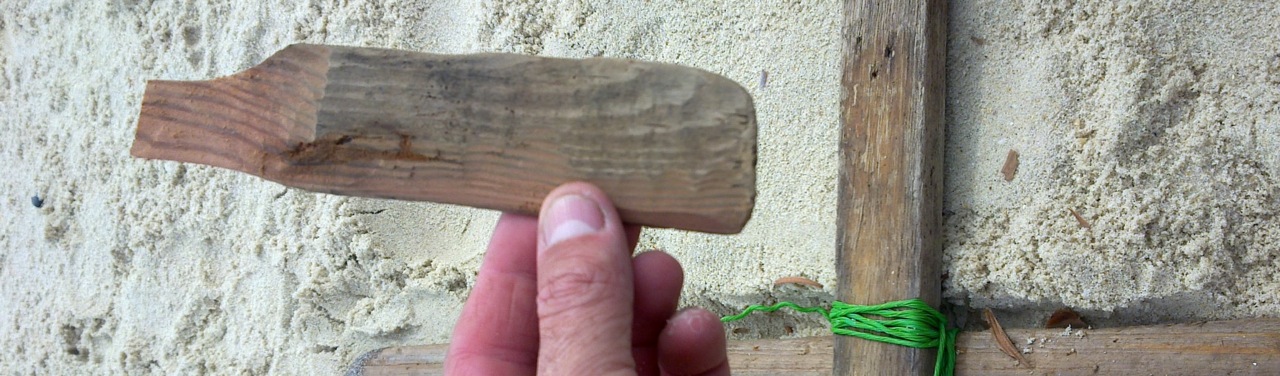
1. Hand carved wooden rudder.
2.

3. Colour.

4.
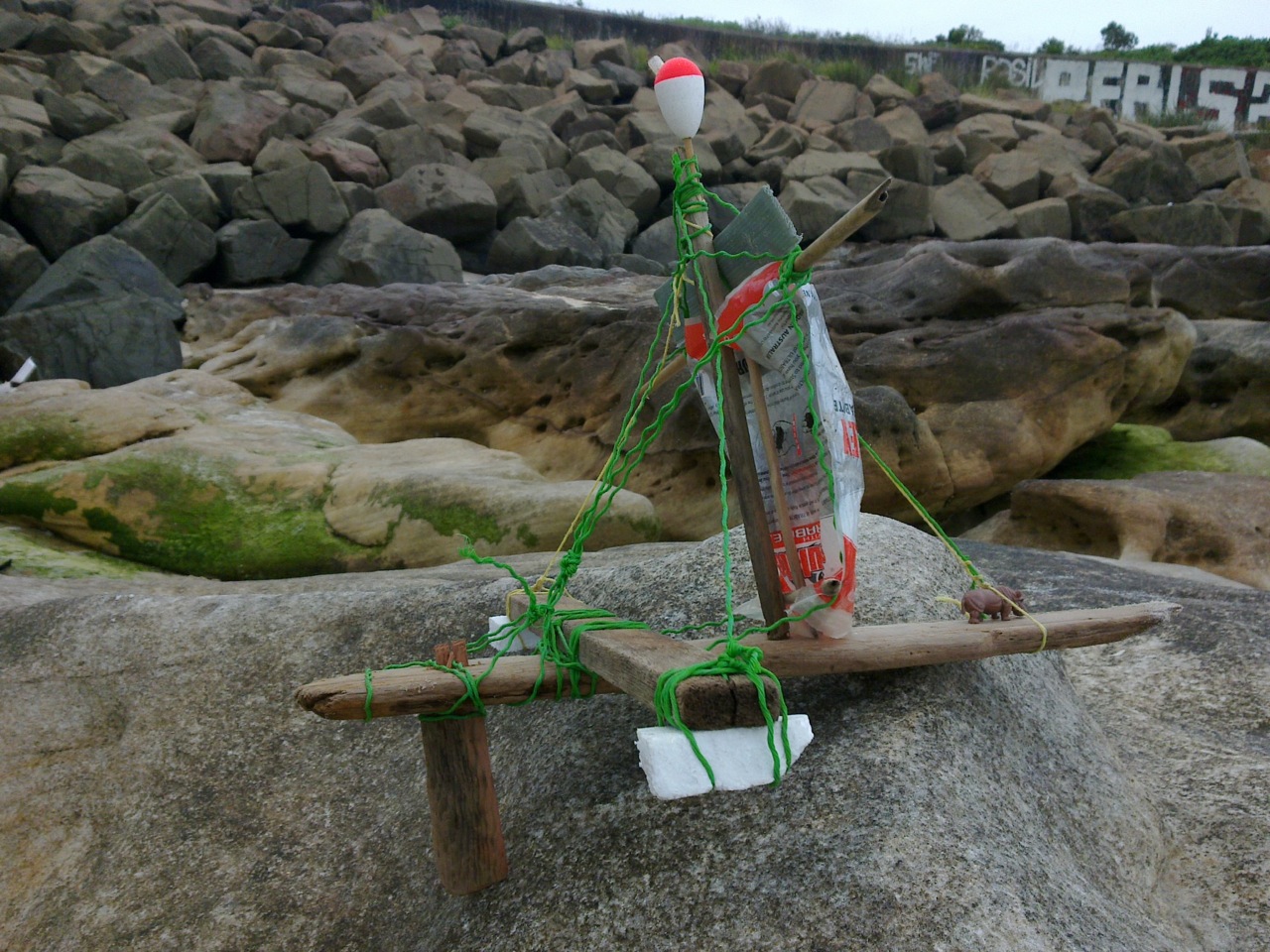
The crucifix timber hull and the discovery of the little plastic hippo led my son to the name of this boat. Another skimmer. Composed of vivid green rope, around a timber hull and a wooden rudder carved with a pocket knife. The sail is a prawn bait packet and the float was added to the crows nest to make it more visible further out. This boat was near as wide as it was long but setting the outriggers far enough back behind the mast seemed to overcome this and it sailed surprisingly well on and out towards the heads. Not being a particularly windy day a little blade of foam was added above the main sail to add thrust.

5. Crazy little Hippo.
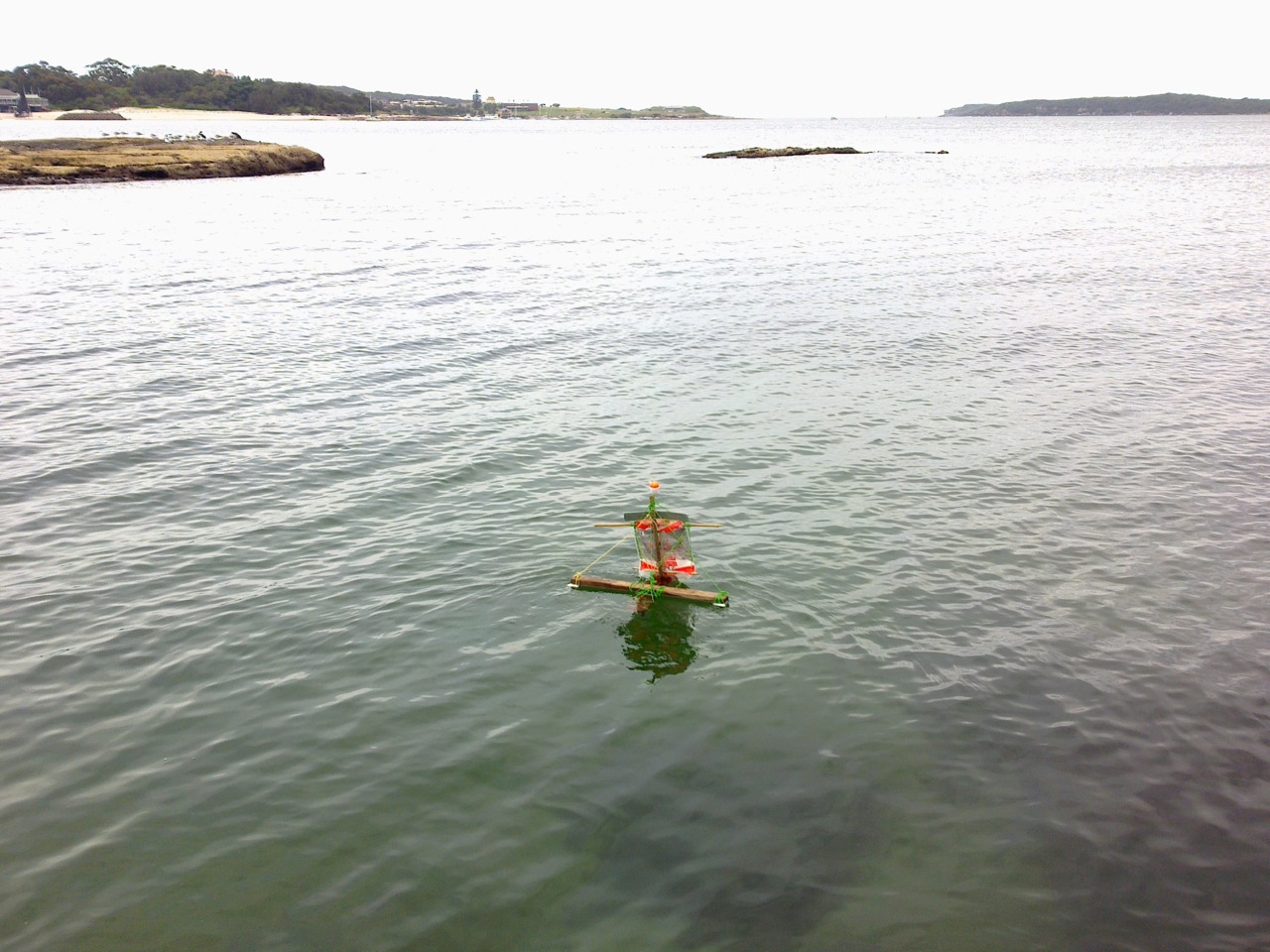
6. Reflection.

7. Bon Voyage.
- Leave a comment
- Posted under Boat
August 31, 2011 Boat 11: Little Rubs
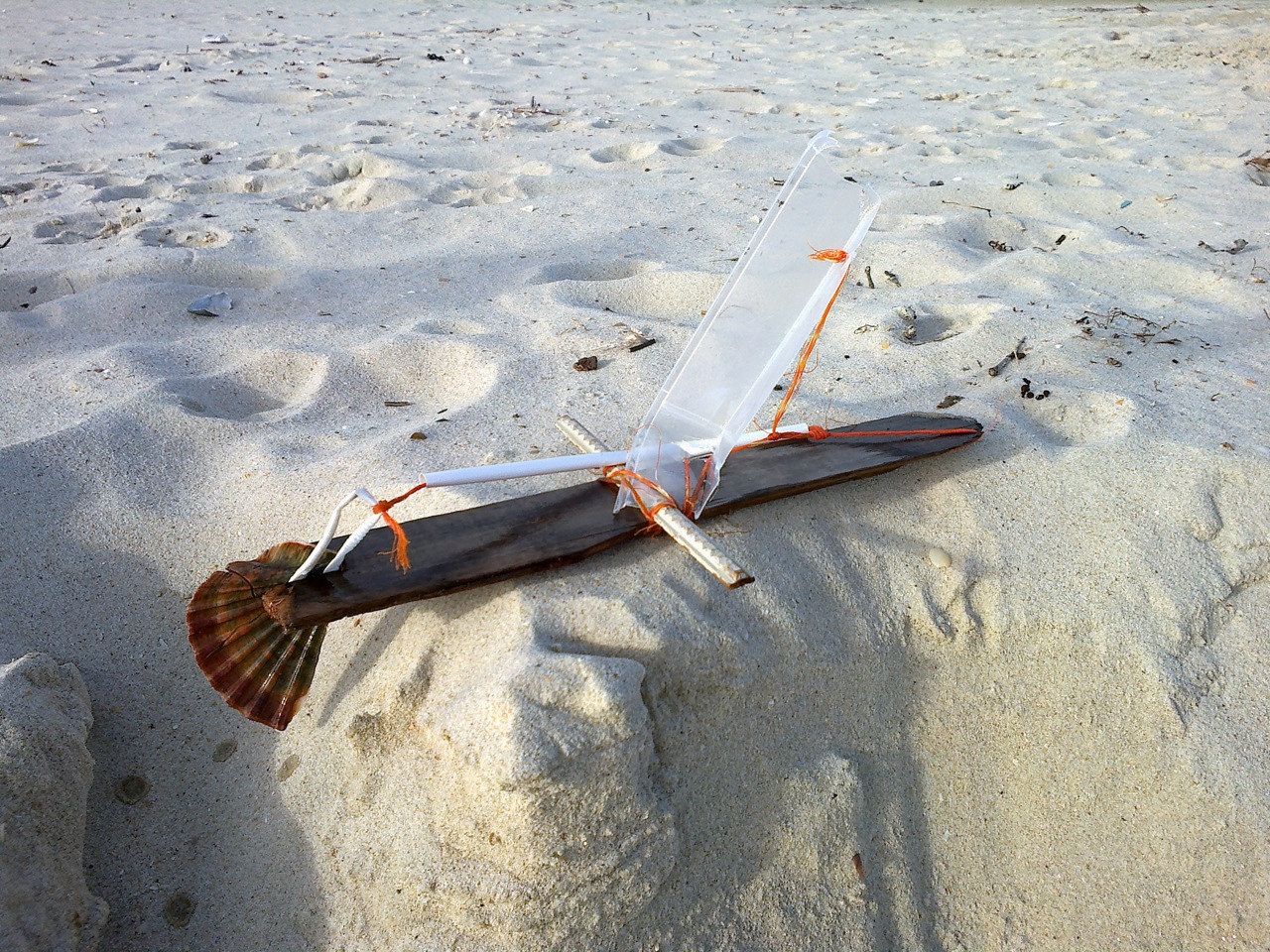
1. Little Rubs
2. Profile

3. Trial run on the creek

4. Pace
5.

6.
7.

8.

9. Cast off
10. Bon voyage
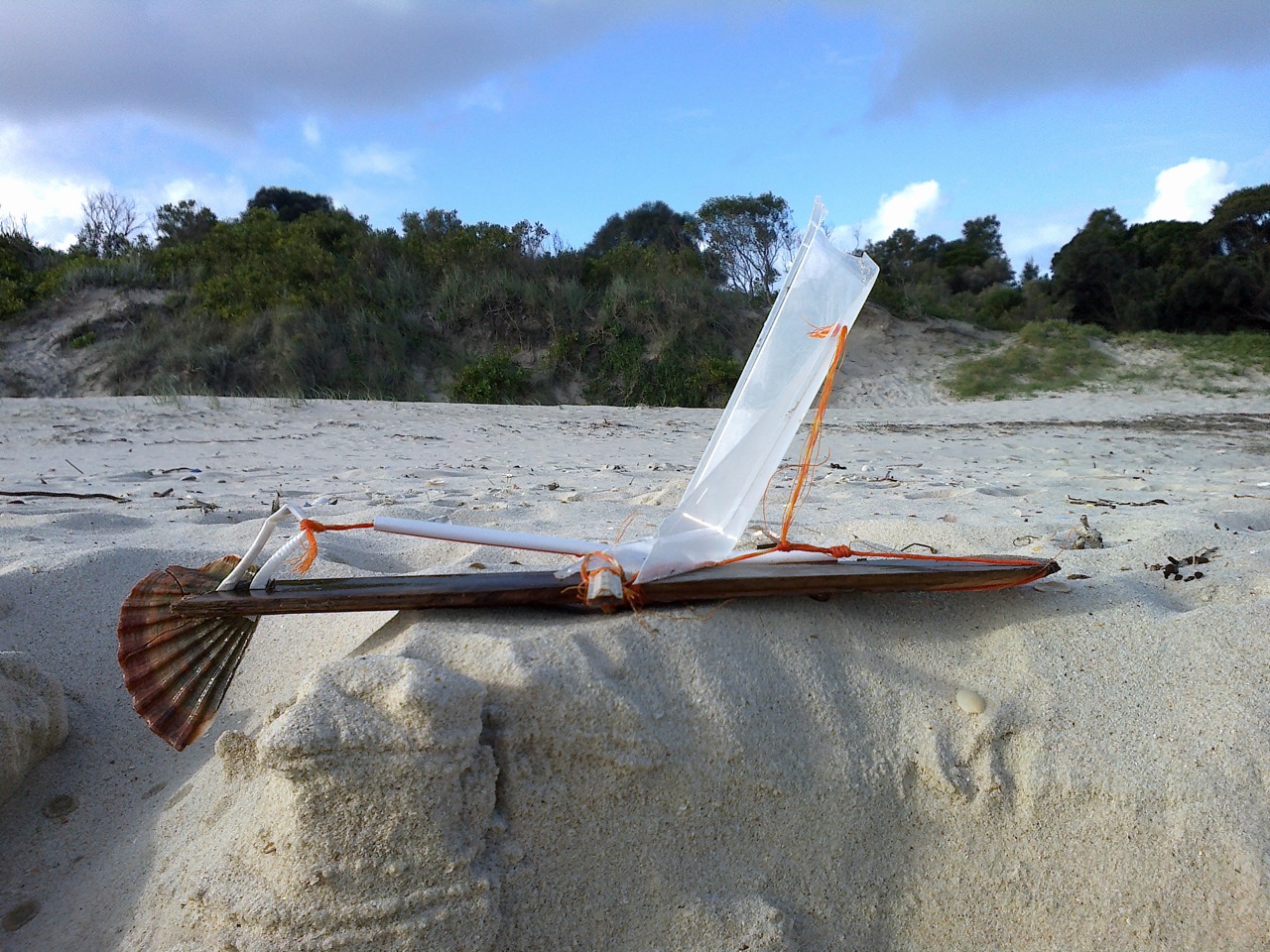
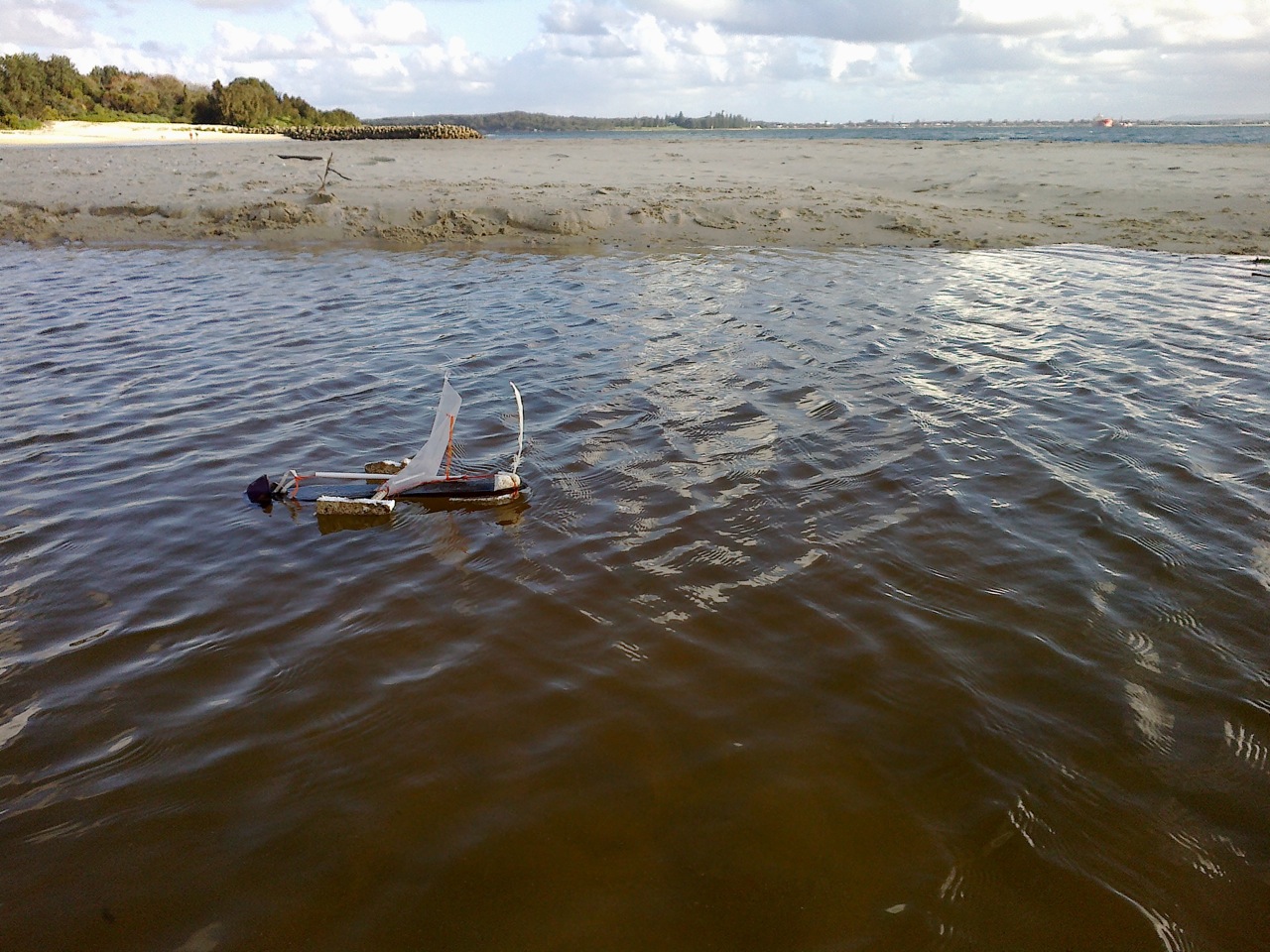
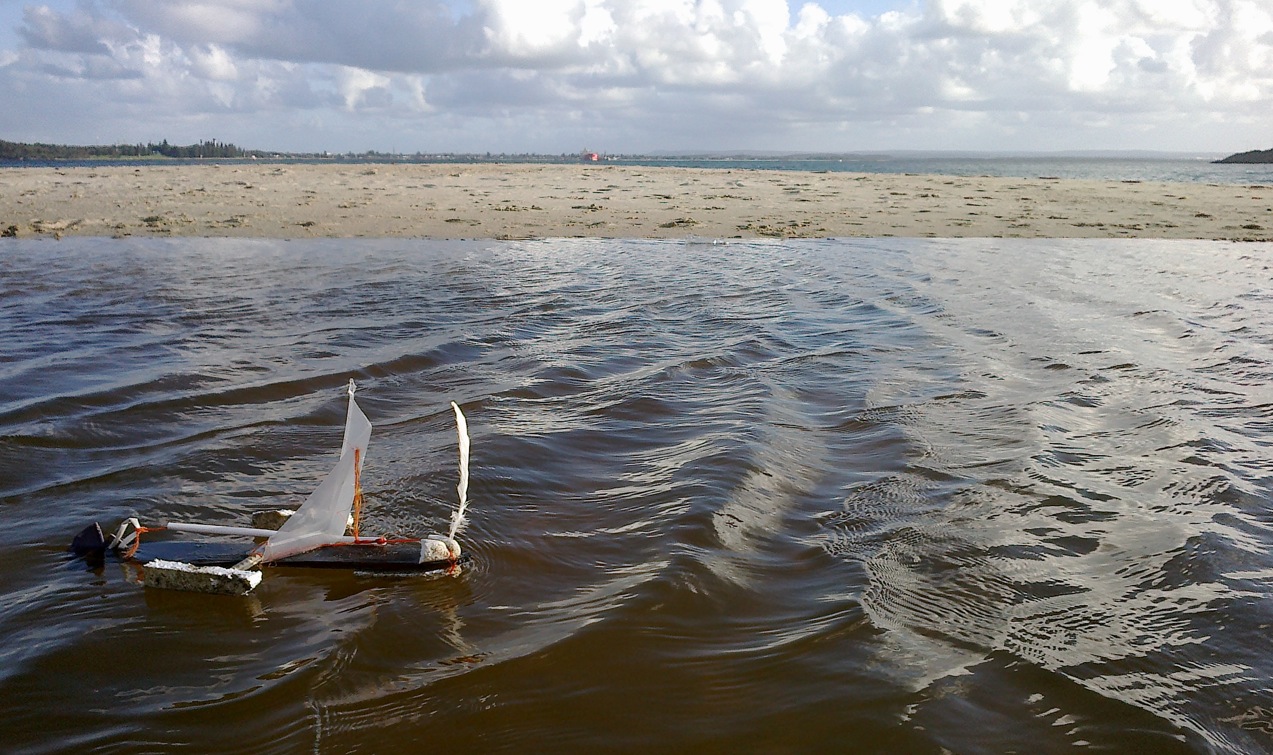
This slinky little craft had a build time of about 20 minutes. It started out being trialed on the little lake behind the dunes without any floats on the outriggers and was surprisingly quick. Assuming it would flip out on the bay some foam floats were added including a chunk under the nose. This had the effect of lifting the thin timber hull rite of the water and she took of like nothing built before on this blog. Skimming down the lake at a steady walking pace, so about 4 km per hour. A shell fragment was cut into the stern as a rudder, a take away food container for a rigid sail and a feather was added on the bow to help ensure the bow was aligned forward more quickly with the wind direction and buffer against tipping. You can see the wake coming off the bow and floats in these pictures.
- Leave a comment
- Posted under Boat
August 25, 2011 R1: WHITE

1.

2.

3. Knot unknown.
I sometimes find ropes or portions thereof washed up around the coast and bays. They can be beautiful in their own rite as a result of the colour and material combined with the wearing process of the sea and shore. In addition they often retain tactile clues to their previous life such as the way the ends are burned or taped off or the way they are stretched or cut or mechanically worn. The final layer that makes them a worthy addition to the blog is the retention of various working knots. Capturing the history, craft and physical dynamism of activities that have taken place somewhere on the water.
- Leave a comment
- Posted under Rope
August 6, 2011 Item 6: Salt Board
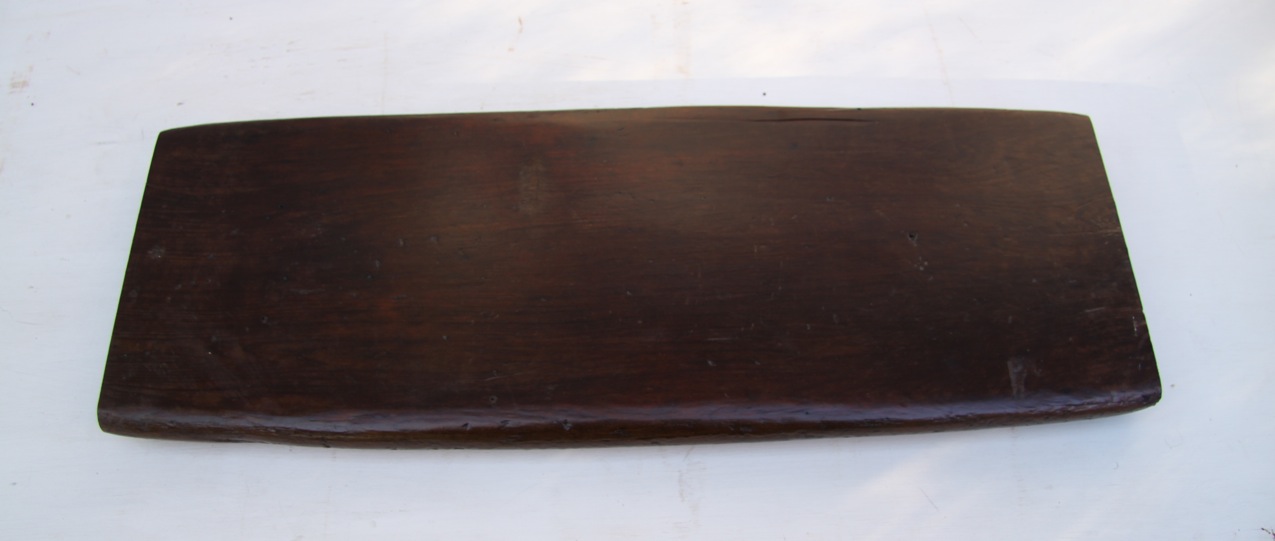
1. Ends cut square
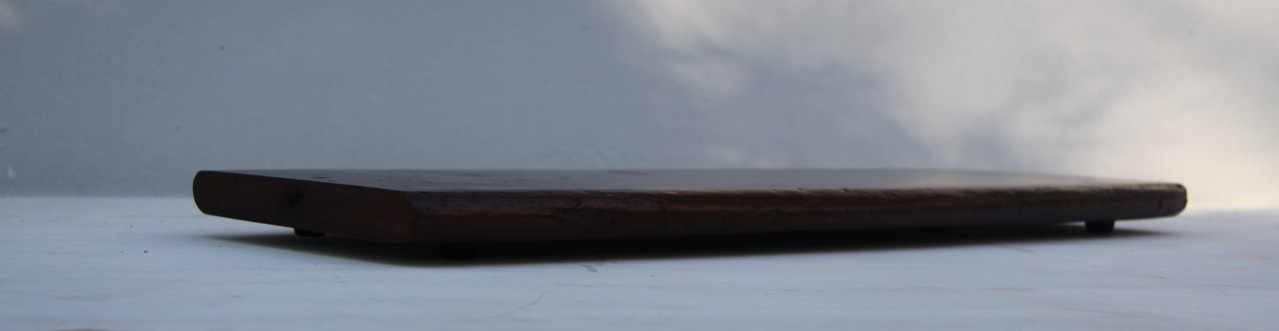
2. Stoppers to base

3. End

4. Colour and history
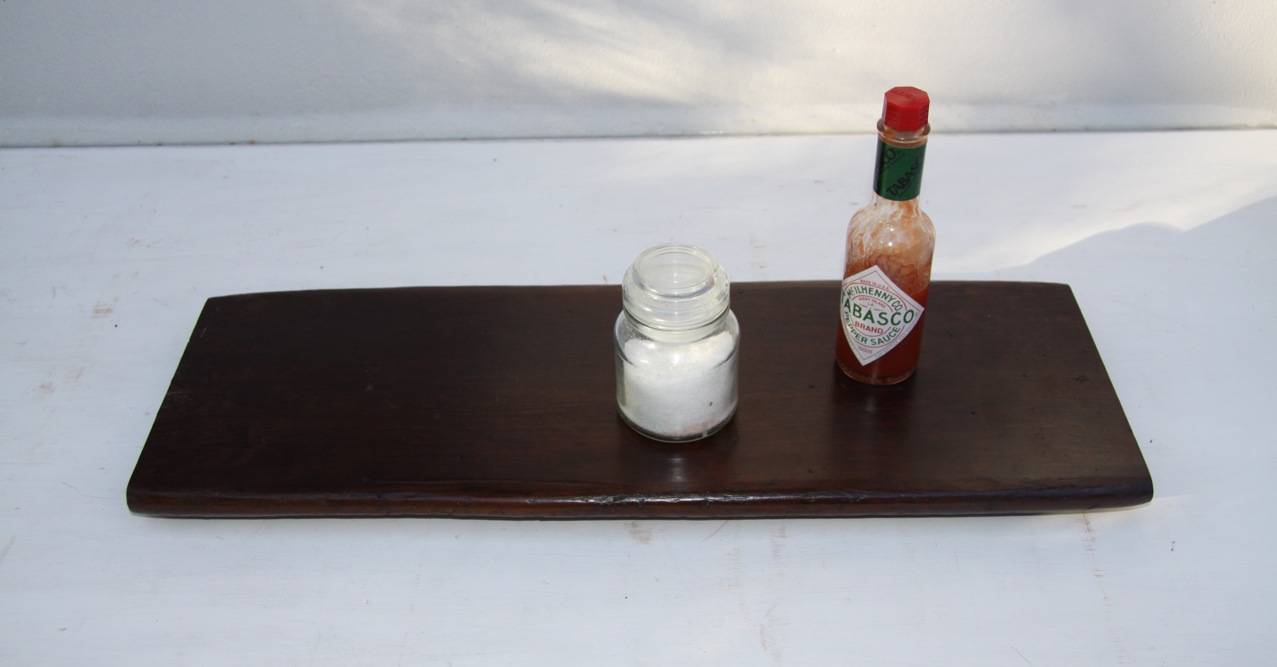
5. At work

6. Colour, history and grain
This was an easily overlooked bit of flotsam washed up south of Sydney. The ends had a stepped cut that suggested it was the lid or top of something on a boat. The timber was very pale in colour and lite in weight. All I did was cut the ends off clean and sand it all back, varnish it and screw some little stoppers under it. The surface is covered in a poetic history of nicks and depressions. The most interesting and still inexplicable thing was that when a coat of clear varnish was added to this pale timber the whole thing turned this handsome chocolate red colour. The long sides are rounded by its time at see and it is now working as a condiments board on the kitchen table.
- Leave a comment
- Posted under Item
July 18, 2011 Item 5: Bulls Eye

1. Half double varnished bulls eye.
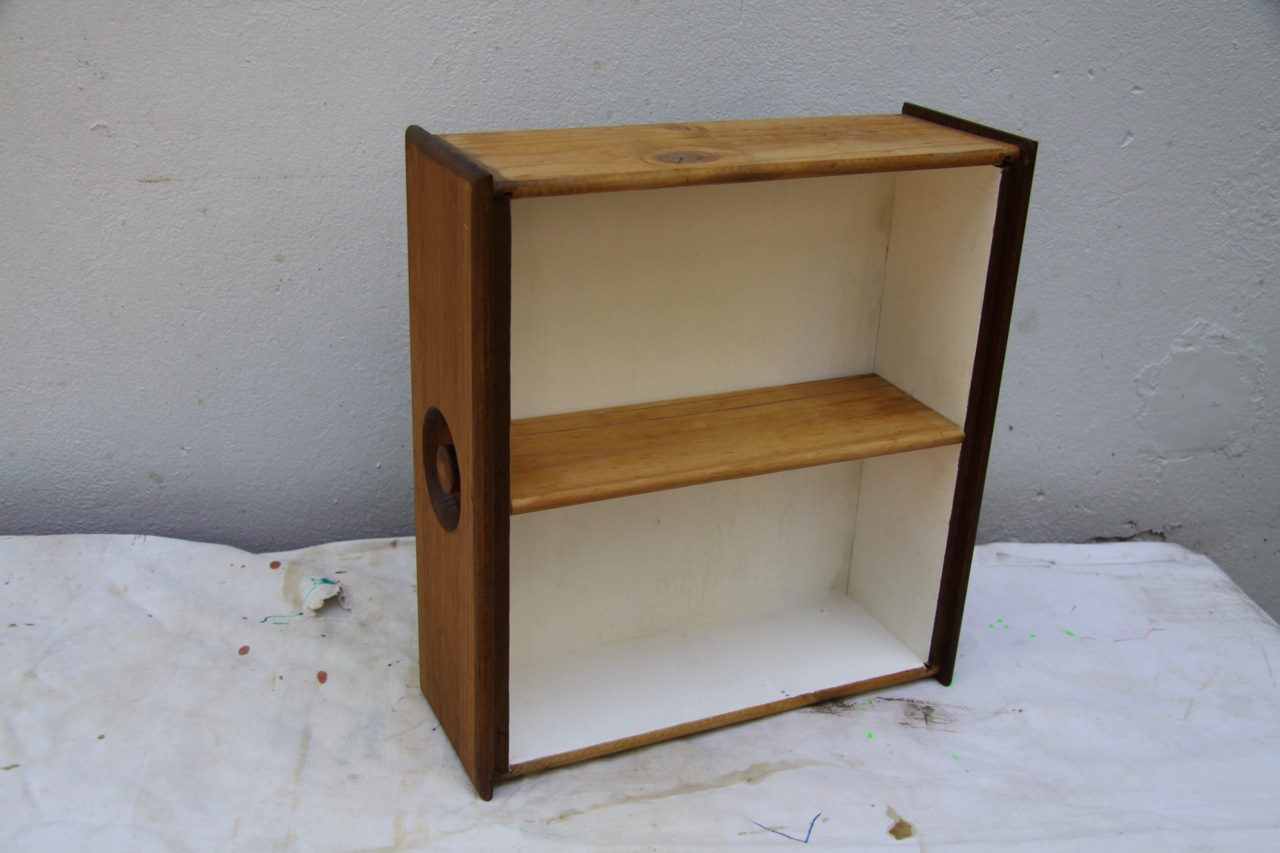
2. The unit.

3. Detail.
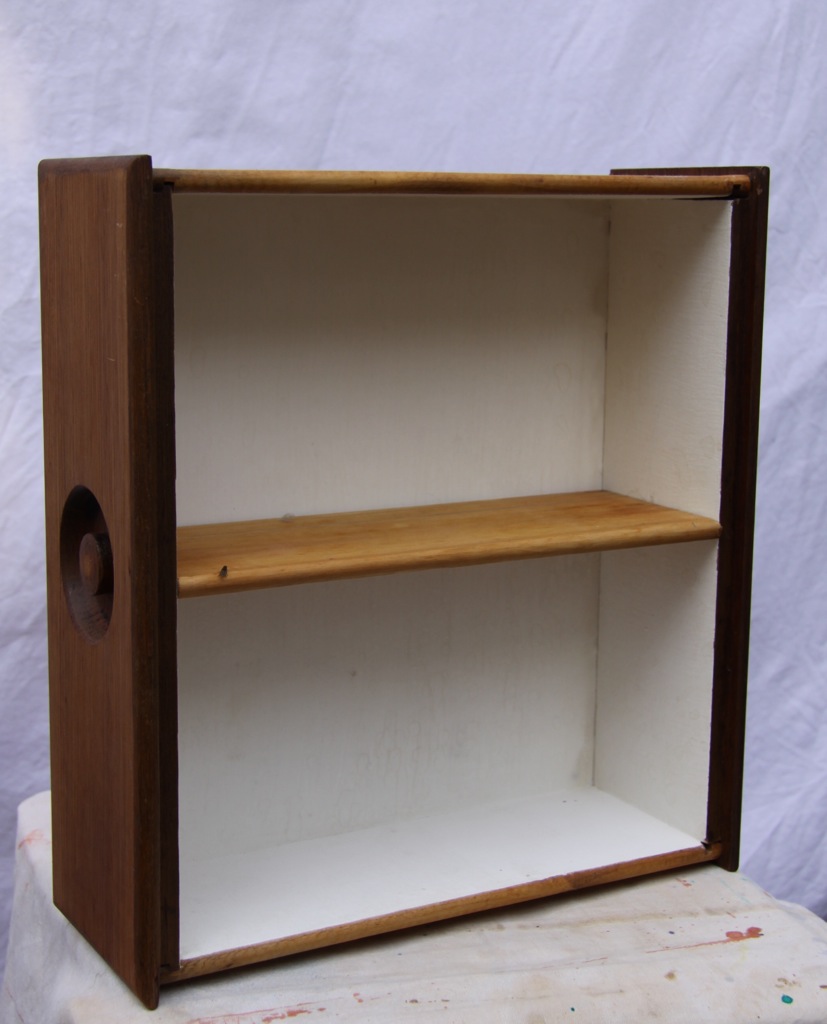
4. The unit.

5. The unit.
Bulls Eye was a simple composition with two drawer faces forming the side walls with the back of one of them being re used as the middle shelf. A bit of half double sanding and varnish and voila you have this beautiful two tone bulls eye detail where the old doughnut carved handle retains some of the old varnish. The middle shelf was nailed through the recess of the handle and the internal surface finished with a lick of white house paint. I am not sure what type of timber the drawer faces are? This item became a bathroom sink shelf.
- Leave a comment
- Posted under Item
July 13, 2011 Item 4: Big Box
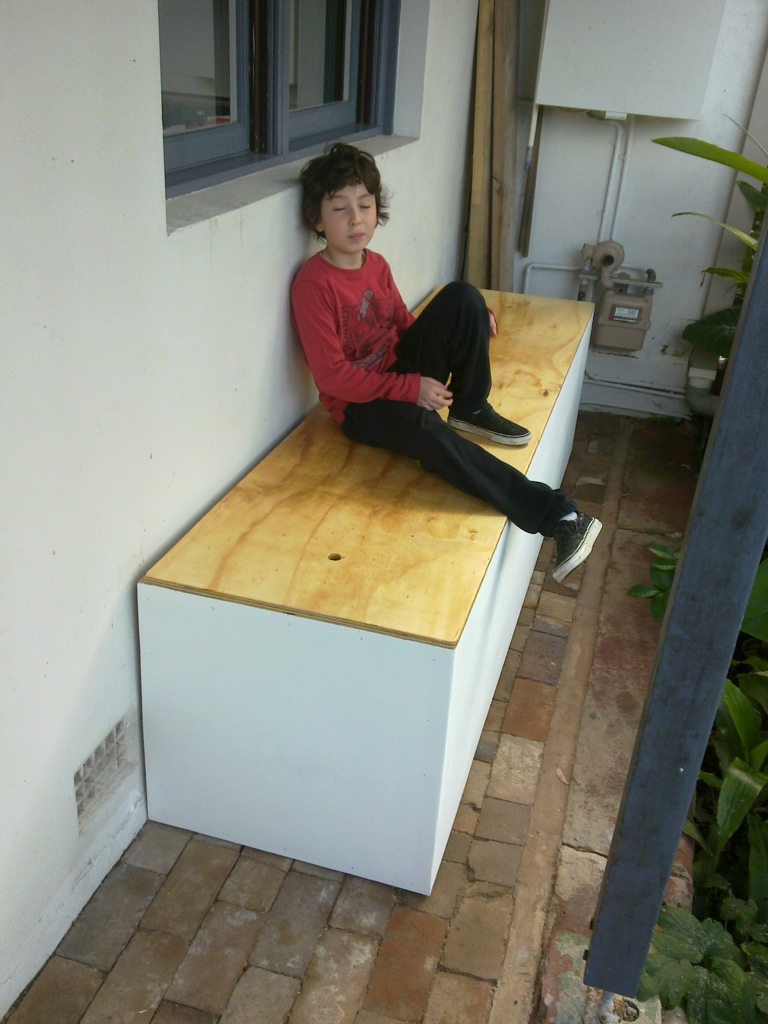
Very inviting to lounge on.
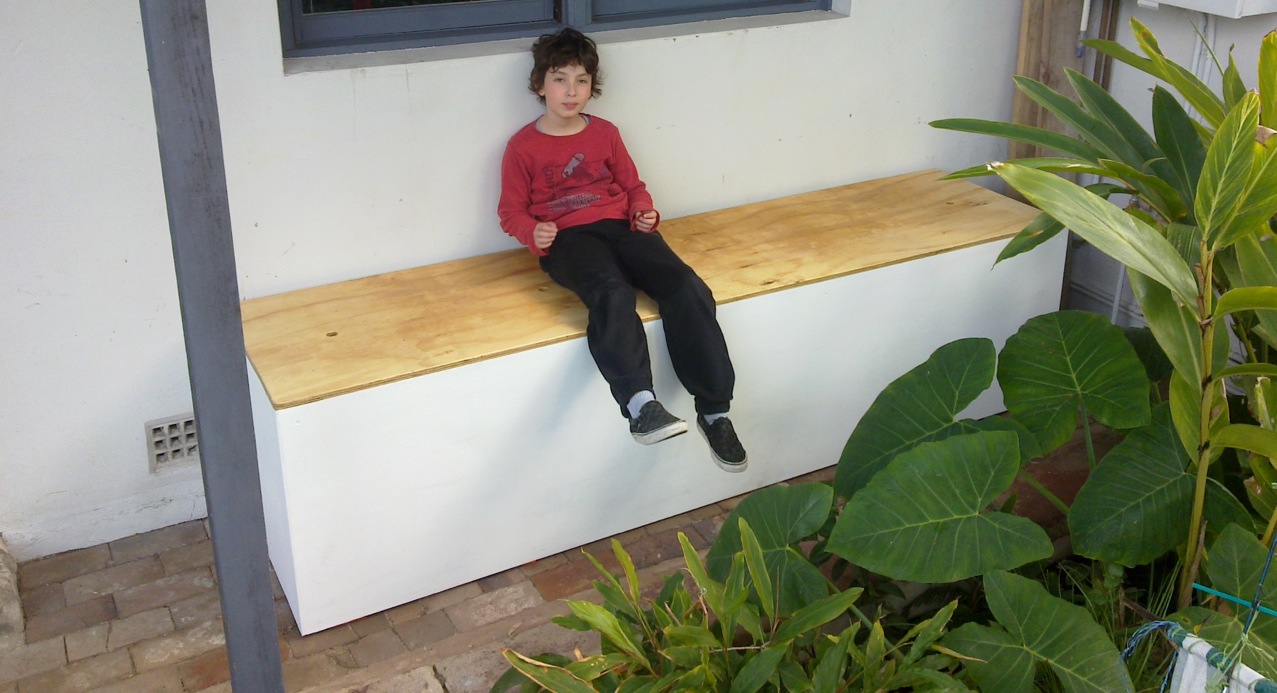
Small lid to the left big to the right.
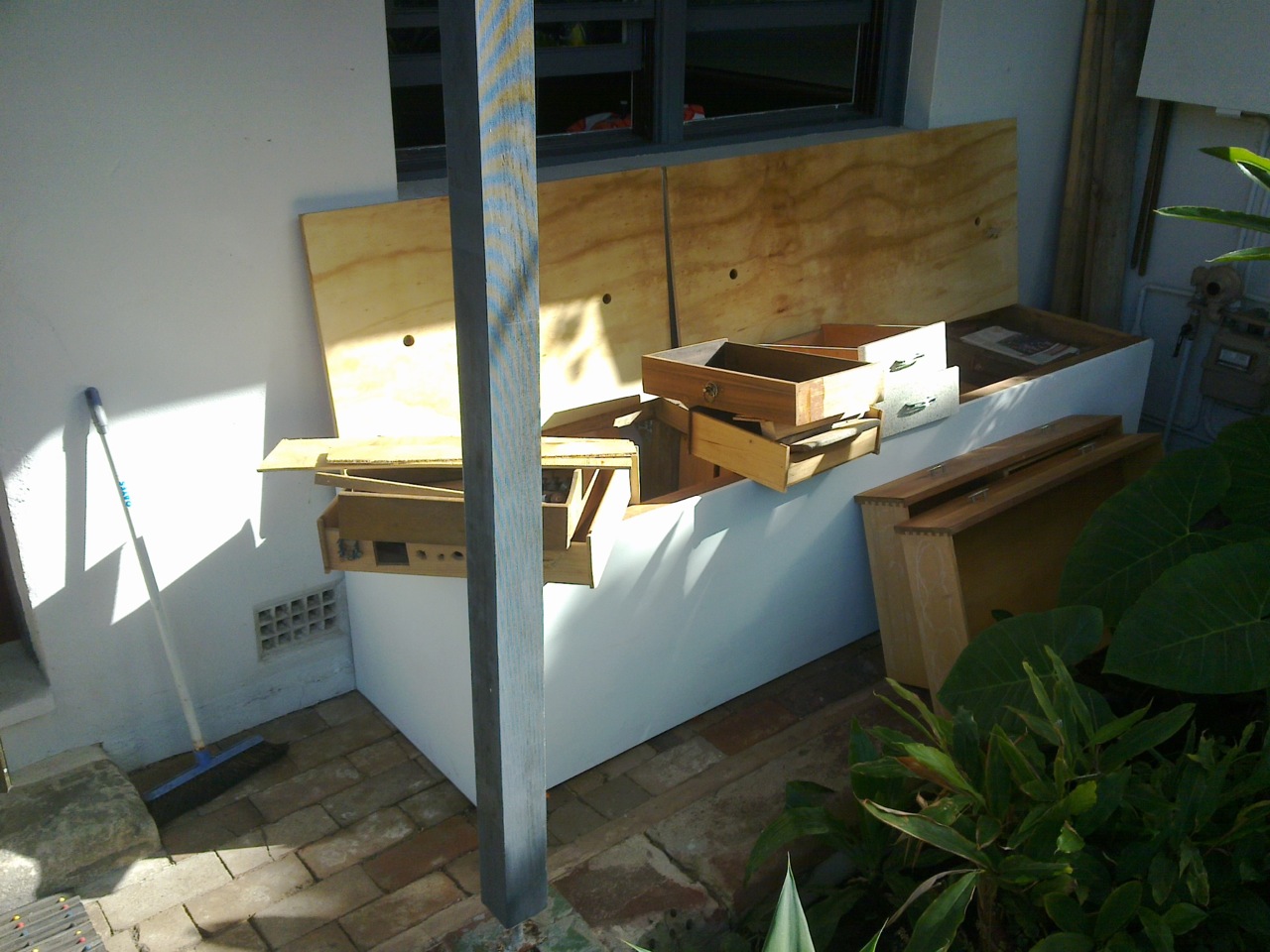
Future projects within.
Big Box was necessitated by the accumulation of ‘ timber bits’ on the front porch. The reasoning was that the bits could largely be accommodated within a large storage volume that could double as a day bed/ stoop bench. The entire structural box frame was made from treated pine off cut lengths rescued from a skip. The end nearest the front door of the house was cut from a scrap of found ply and the back and far end were left open as A you cant see them and B this provided great ventilation to the timber within and the under house vents located in the wall behind the box. The two part lid and face were one entire sheet of ply 1200 x 2400mm cut long ways down the middle. Then the lid portion was cut to the golden mean and the remainder.
The faces were painted white and the lids mat varnished with the grain aligned along the two lids. Some finger holes were bored and sanded in the lids for lifting off.
- Leave a comment
- Posted under Item
July 13, 2011 Boat 6: Less and Learned Part B

The Phoenix rises again.

A test Float in zero wind.
Added coffee cup sail didnt help in zero wind.
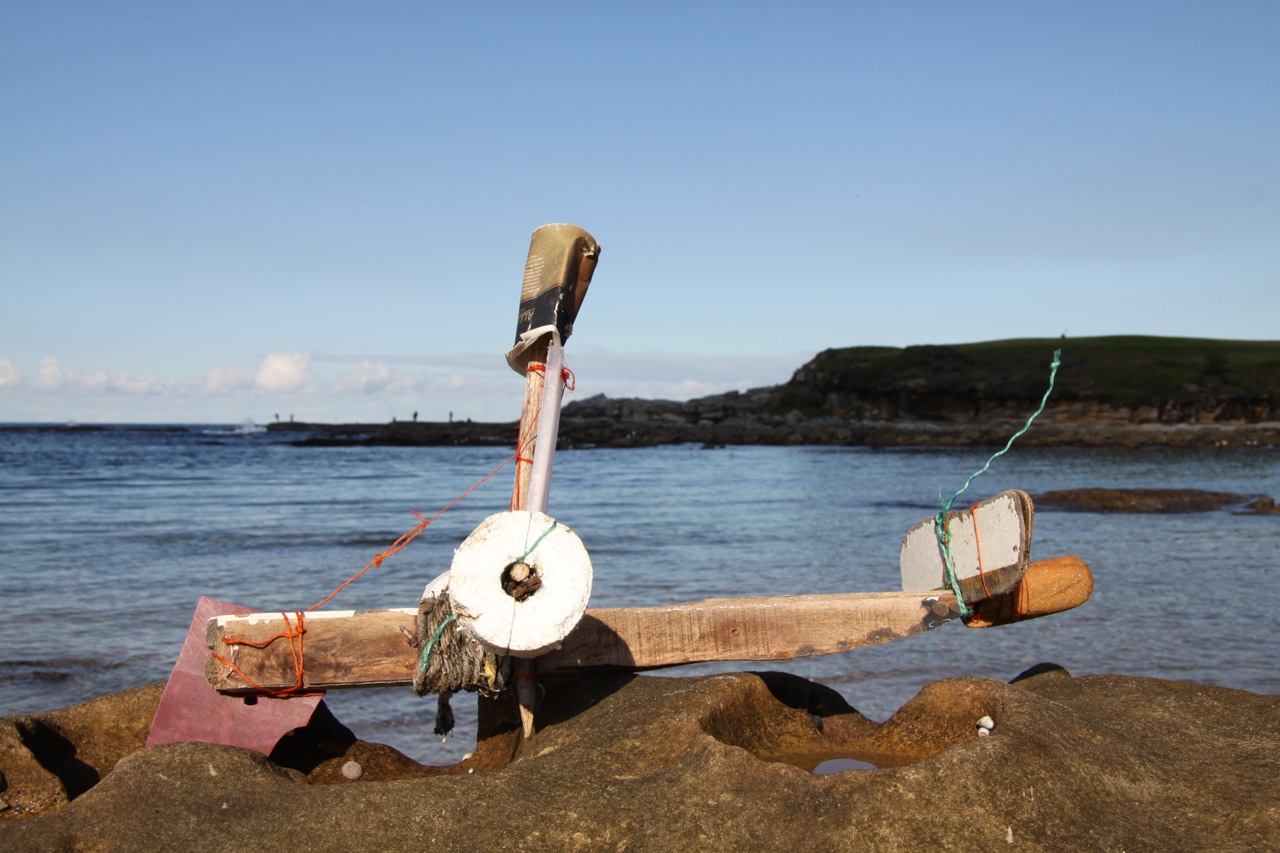
A few weeks after launching the Less and Learned along with the All Prezz Exprezz and watching it come spectacularly undone as it was washed into the rocks in a big swell we returned to Little Bay to find they had both been collected from the rocks and delivered unto a little rubbish collection point. We had already had a failed launch that morning and raced to put the Less and Learned back together. Partly scavenging parts of the All Prezz to use as new outrigger floats. By the time we were ready the wind had turned inland and we had to throw Less and Learned into the car for another day.
- Leave a comment
- Posted under Boat
July 3, 2011 Boat 10: The Eric part b
1. Leaving Gordons Bay.

2. Waiting for the wind.
3. Pushing out.

4. Clearing the headland?

5. From the stairs to Gordons Bay.
6. From the stairs to Gordons Bay.
7. From the headland.

8. From the headland.

9. Heading along the point.
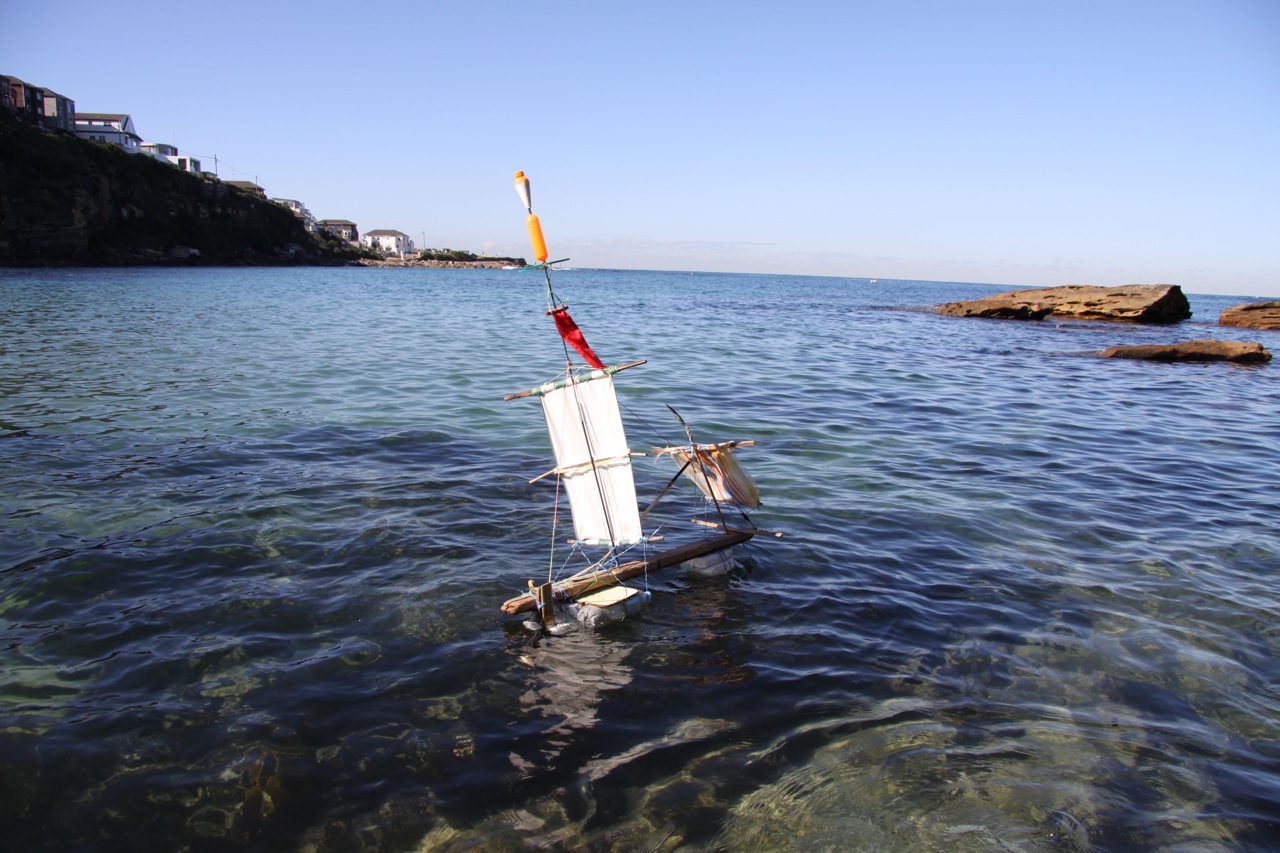
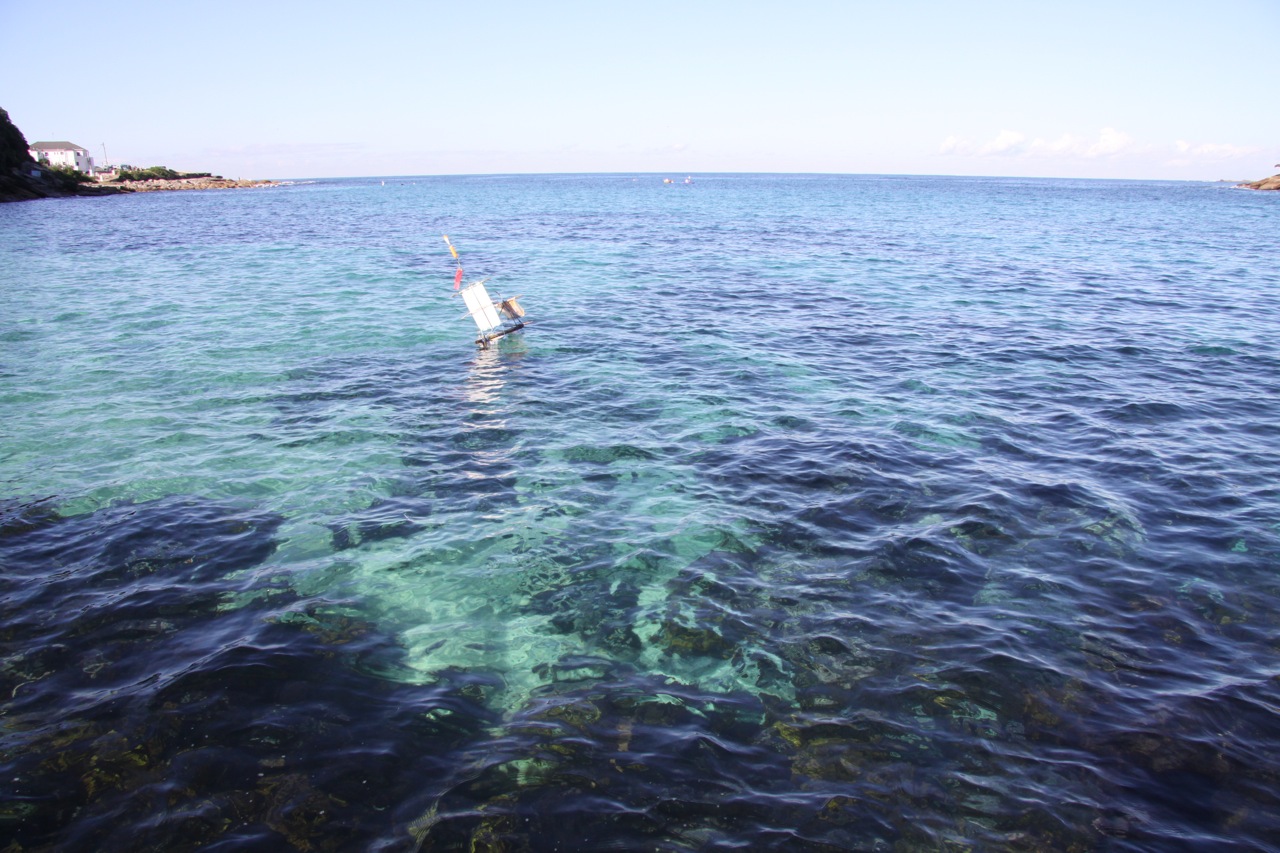
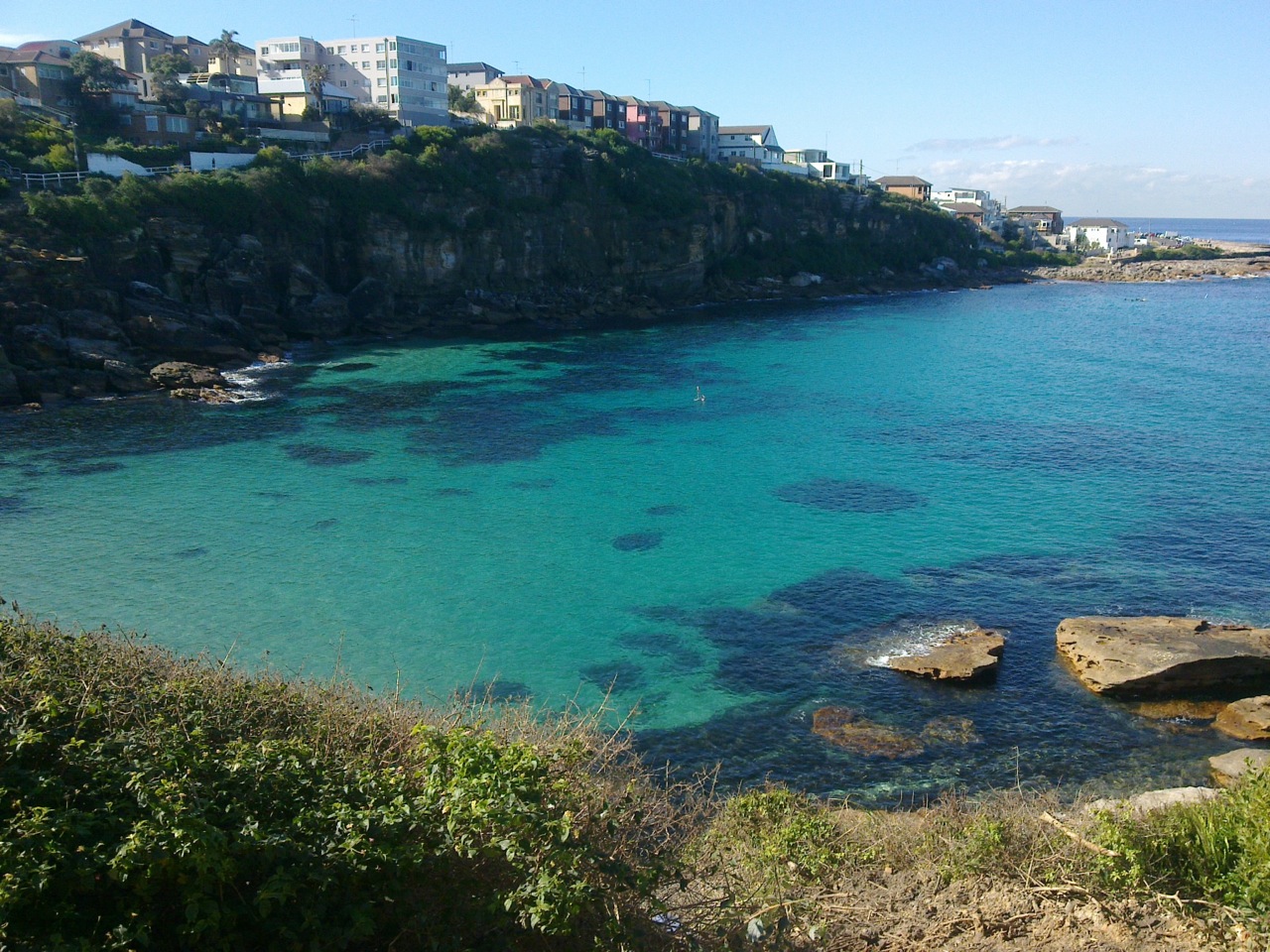
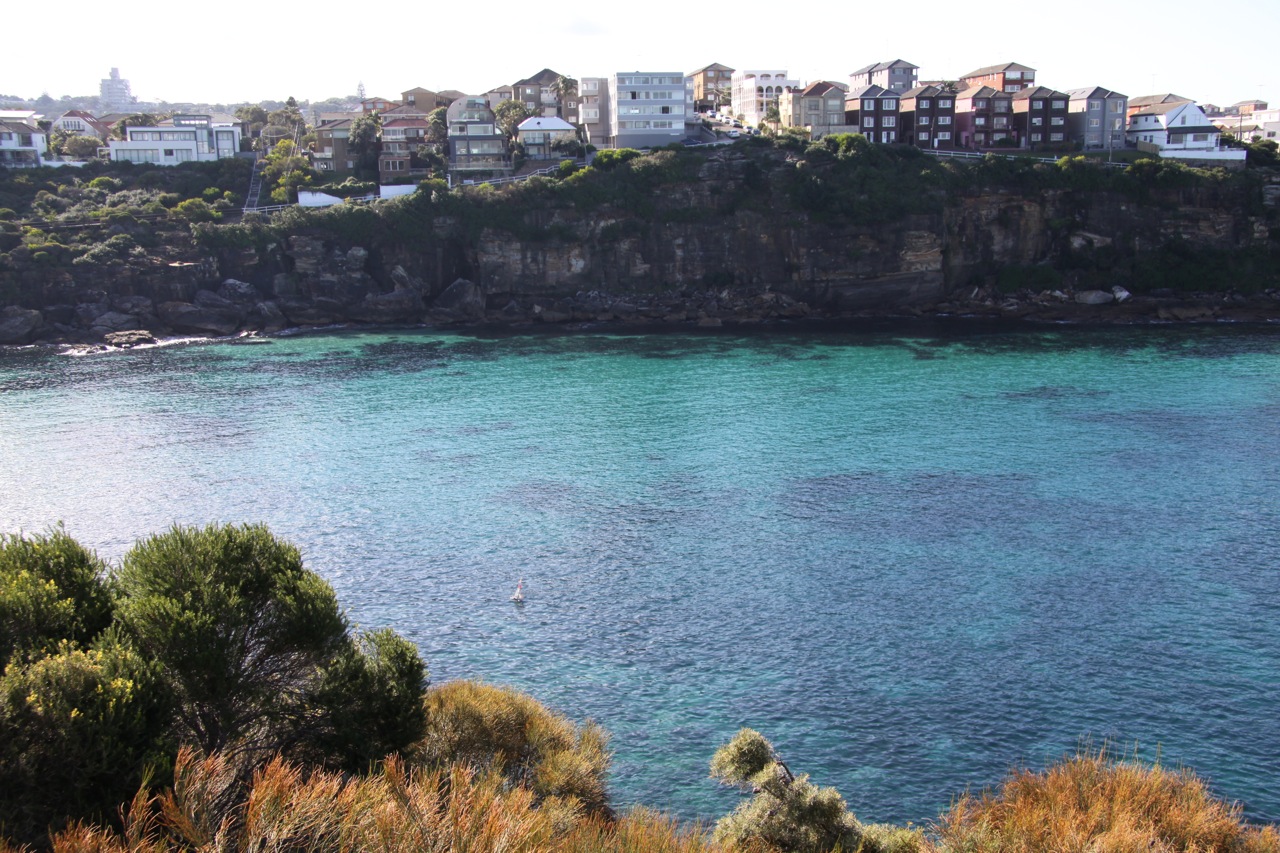
We finally found a morning with favorable winds and took the Eric down to Gordon s Bay where we determined we could get a sea bound launch of the rocks with some cover from the bay. Unfortunately I had set the rudder to far to the left and she pulled across the SSW and possibly into the rocks on the other side of the bay rather than clearing the headland and heading out to sea. Though we will never know as we had run out of time and were watching from a headland above as she sailed under our view and we had to leave. You can also see here that the fore sail had subsequently been re rigged in a more similar style to the main sail also cut from a washed up deck chair.
- Leave a comment
- Posted under Boat
June 26, 2011 Boat 10: The Eric Part A
1. The bits.

2. Point launch.

3. Headed for the beach.

4. Leaving the point.
5. Comming in.

6. Landing.
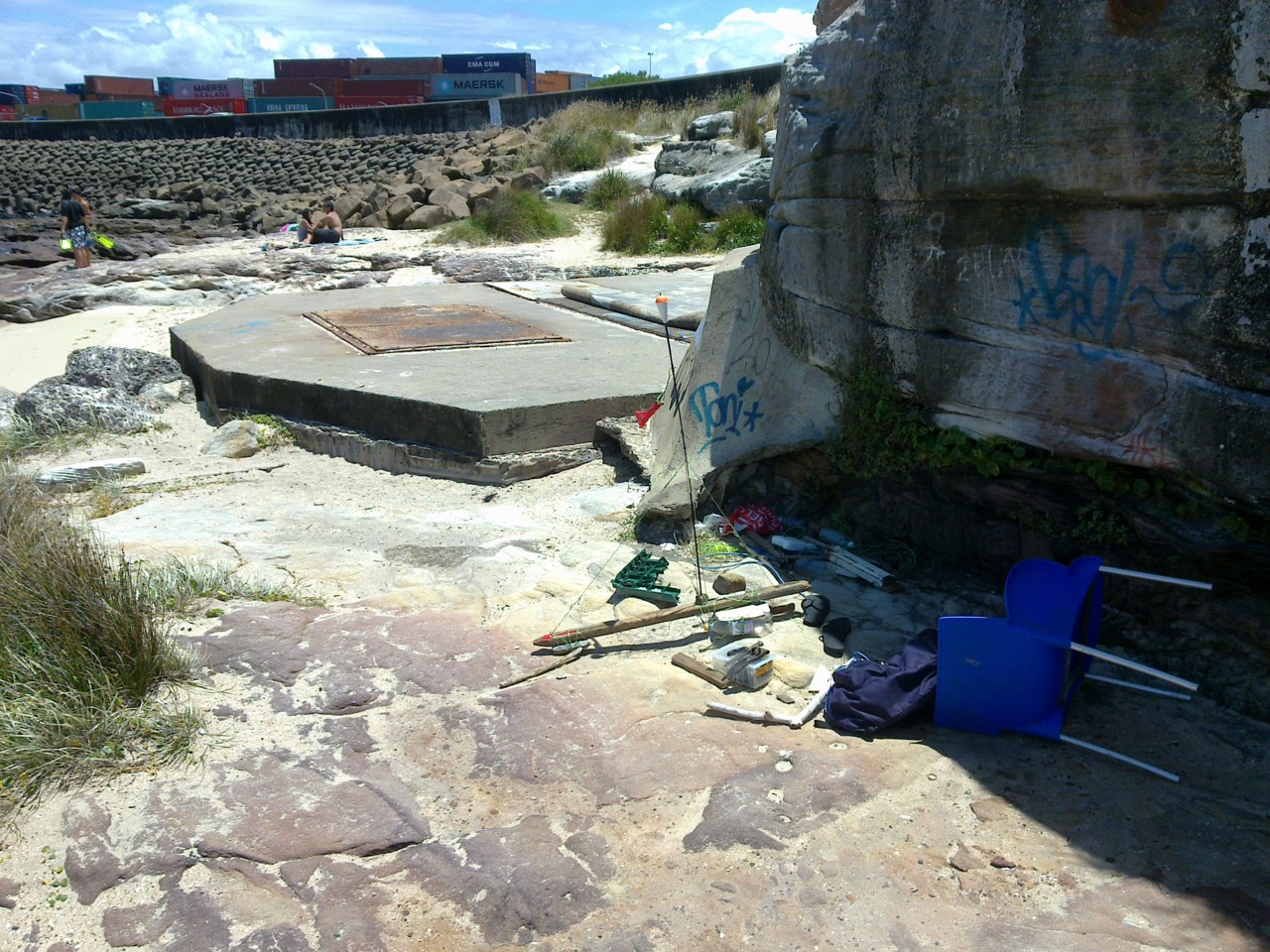
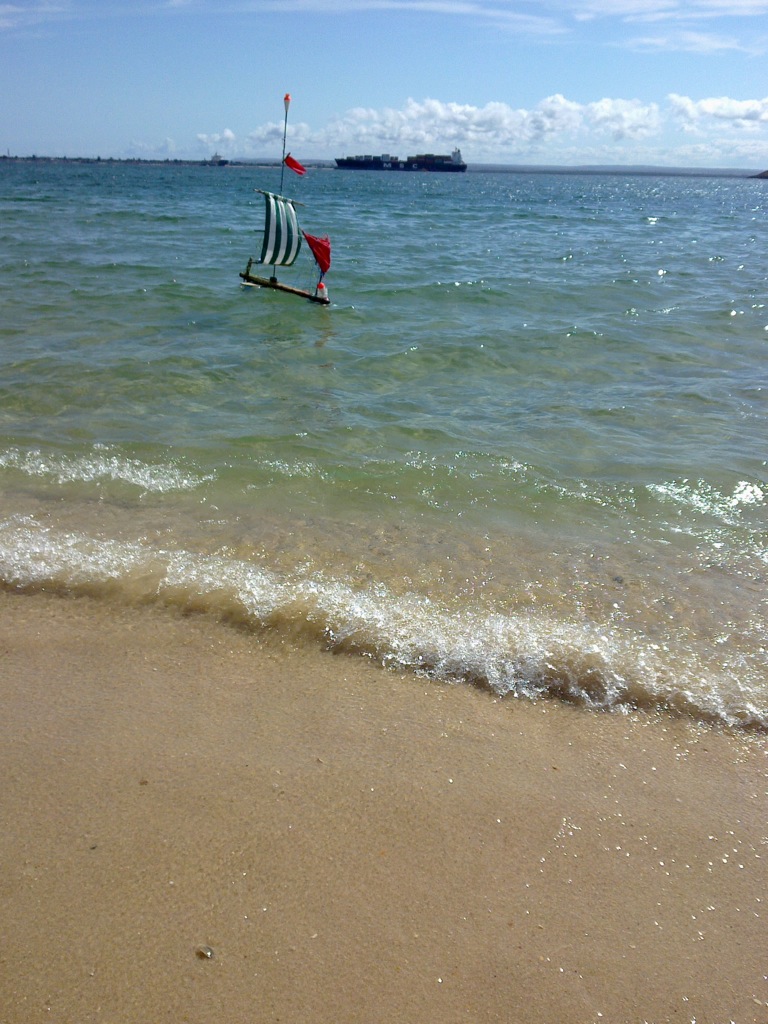
The Eric was a prolonged experiment that involved a couple of test launches while waiting for a suitable off shore winter breeze to sail her out into the Pacific. She was first cobbled together from flotsam collected along the rocks at Yarra Bay and test sailed from the tip of the artificial wave break back to the beach. The hull was a timber, PET bottles and foam combo with half a brick tied under it on some timber lengths. This was one of the first self righting non skimmer style boats. The mast was from lengths of abandoned fishing rod fixed together and the main sail was cut from a washed up deck chair. A float and a bit of red cloth were fixed from the crows nest a a means of greater visibility for longer should a successful sea launch be achieved.
The sail was located to far back for such a long bow and she sailed ‘sideways’ on her first run. This was corrected by adding an additional rudder and also a foresail to assist in keeping the nose downwind.
- Leave a comment
- Posted under Boat
June 24, 2011 Boat 9: First Fleet
1. Front view.
2. Rear view.

3. First Fleet with Flying Squid.

4. The Perfect Storm.
5. Bon Voyage, First Fleet leaving Botany Bay.
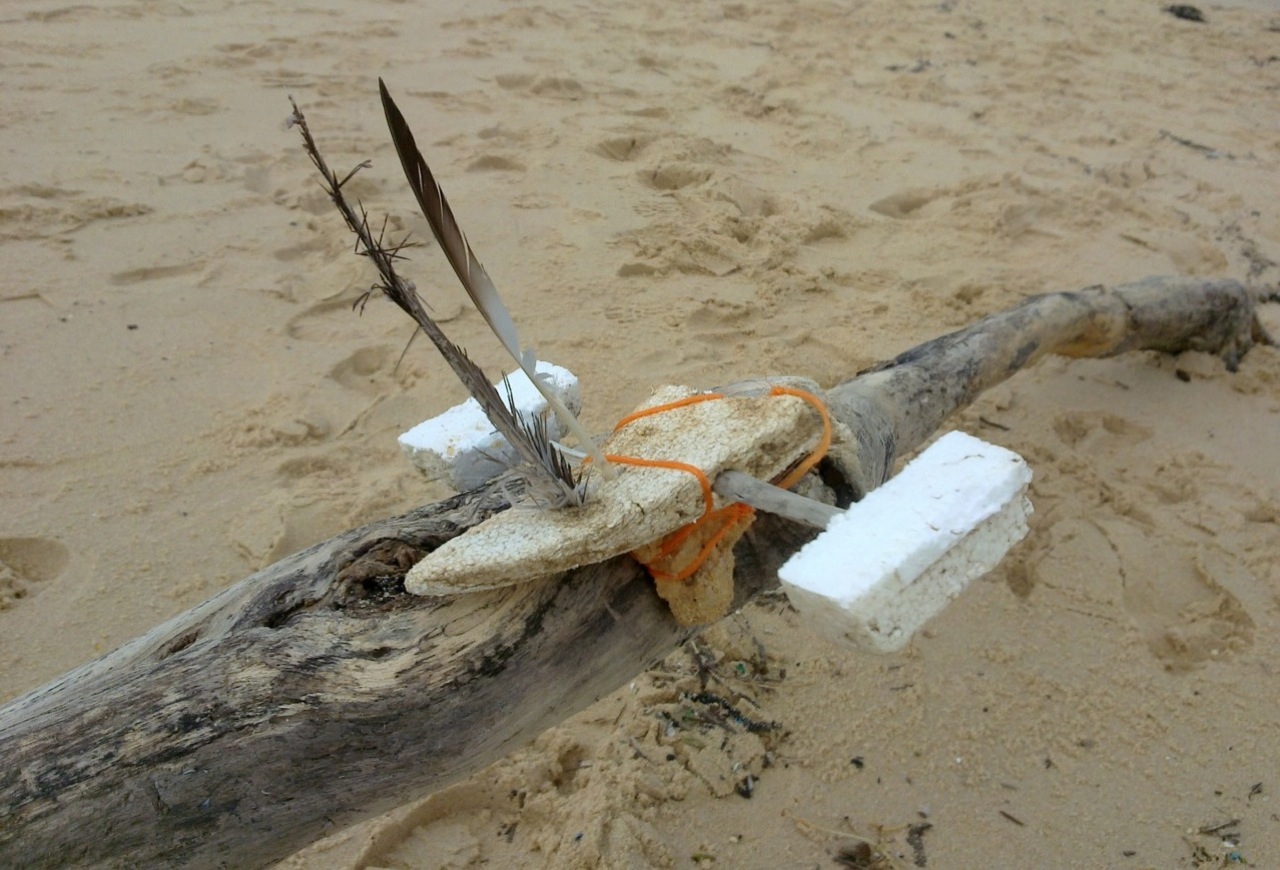
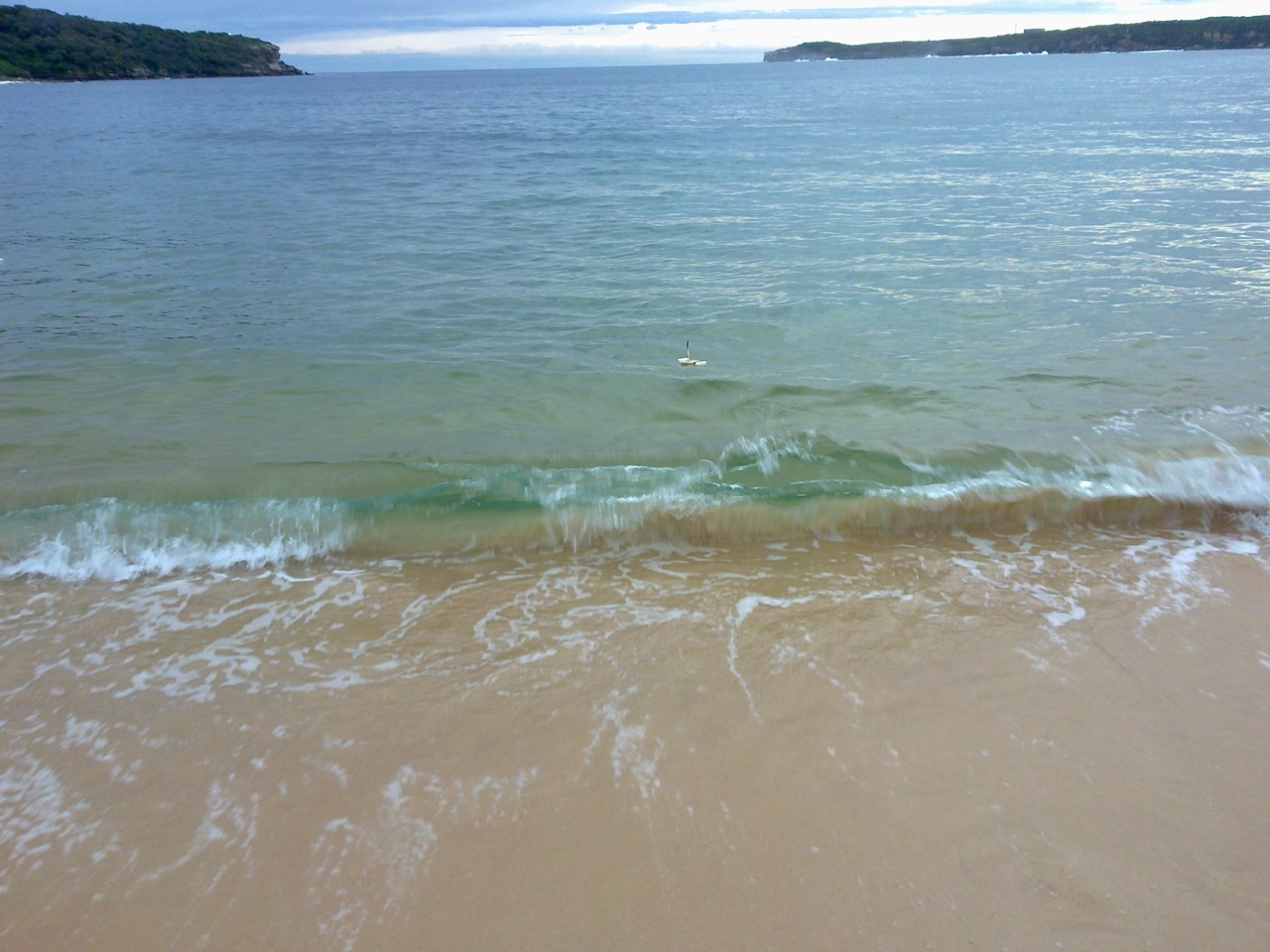
The First Fleet was a composition of foam and feather that my son put together. He called it First Fleet as it was the first time he had a real go at making a boat (not to overlook this is Botany Bay ). It sailed very well as you can see. One of its claimed features was that it could be ‘chuck launched.’ That is to say it could be launched by throwing it out behind the shore waves and it would land rite side up unbroken. The First Fleet was launched with Flying Squid at Congwong Beach
- Leave a comment
- Posted under Boat
June 21, 2011 Boat 8: Tiwi and Exon

1. From rubbish to boat.
2. Me and Tiwi and J W with the Exon.

3. Early enthusiasm.

4. Bon Voyage Exon.

5. Bon Voyage Tiwi.
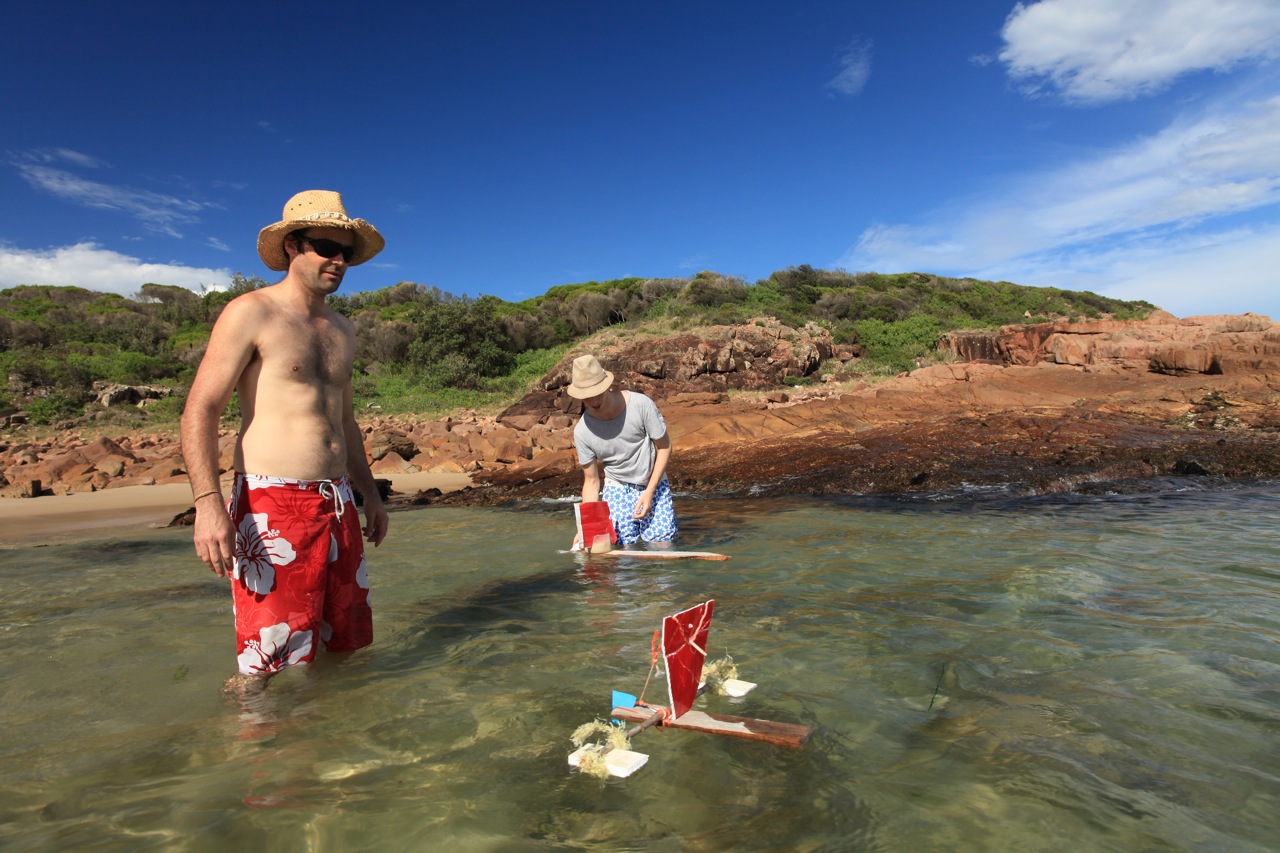
The outstanding pictures in this Post were taken by our friend Christian Borchert. Actually two boats Tiwi and Exon were a competitive enterprise whipped up on the beach at Fisherman’s Bay. Our friend Johnnies Exon was a plank and sand tub affair with foam core sail and rudder wedged into slots in the sand tub. The Tiwi was a smaller plank and foam outrigger number with a trapezoid foam core sail. Apart from being easier and quicker to manufacture than sheet style sails the foam core sails seem less prone to flipping the vessel. Probably because as the boat tips forward the air pressure is shed from the top of the flat plane. Whereas it tends to ‘hook’ in the slack at the top of a plastic or cloth sheet sail. The Tiwi pushed rapidly out into the Pacific Ocean. In fact when we left the beach and walked up to the top of the headland we could still make her out way out past the heads. Sadly the Exon, as per its namesake, came unstuck in the chop around a near reef and spilled its load of sand into the Pacific.
- Leave a comment
- Posted under Boat
June 21, 2011 Boat 7: Flying Squid

1. Flying Squid.

2. Flying Squid.

3. Next to strange beach object.
4. Bon Voyage.
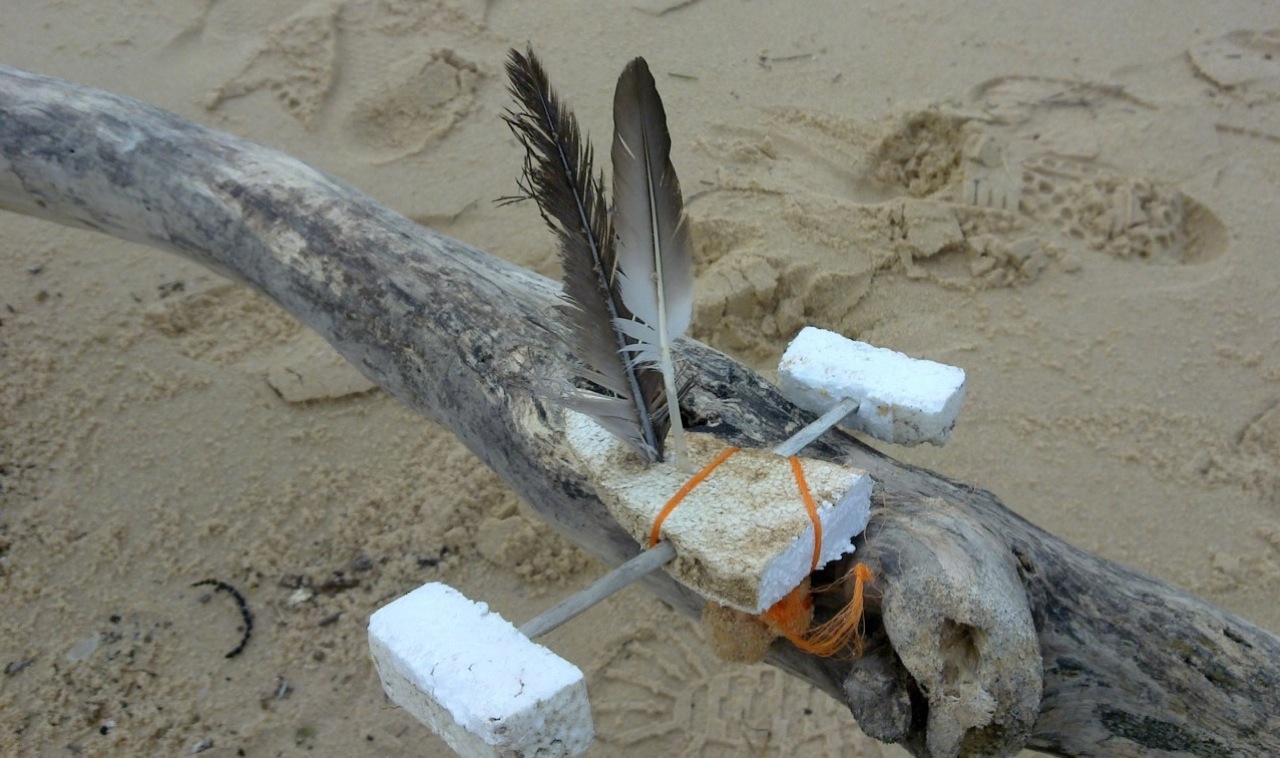
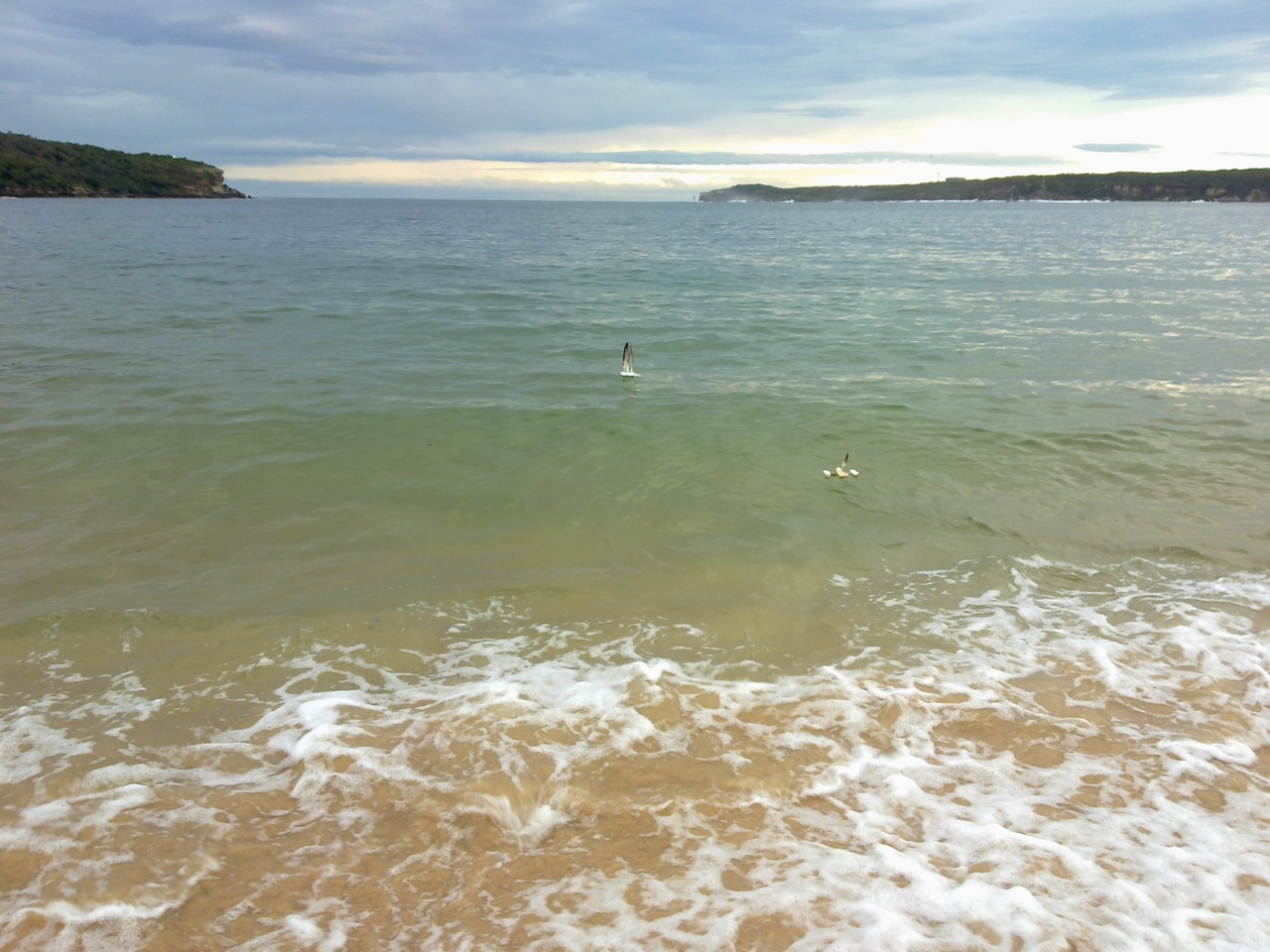
The primary components of the Flying Squid are the squid cuttle hull and the pelican feather sail. This was a fast construct on Congwong Beach after a bush walk around the headland with my son. The outriggers are cut foam pinned on stripped down pelican feathers. The keel is the corner of a plastic chopping board pushed through the hull and held up with a length of bamboo pushed through a cut hole. The whole thing tightened down with a scrap of orange plastic rope. The multi feather sail was just stabbed into the deck. It sailed surprisingly well and steadily made its way out towards the heads.
- Leave a comment
- Posted under Boat
June 20, 2011 Boat 6: Less and Learned

1. Less and Learned with bow board sail.

2. Tupperware sail.
3. Zip cord outriggers.
4. Bon voyage.

5. Heading for the rocks.
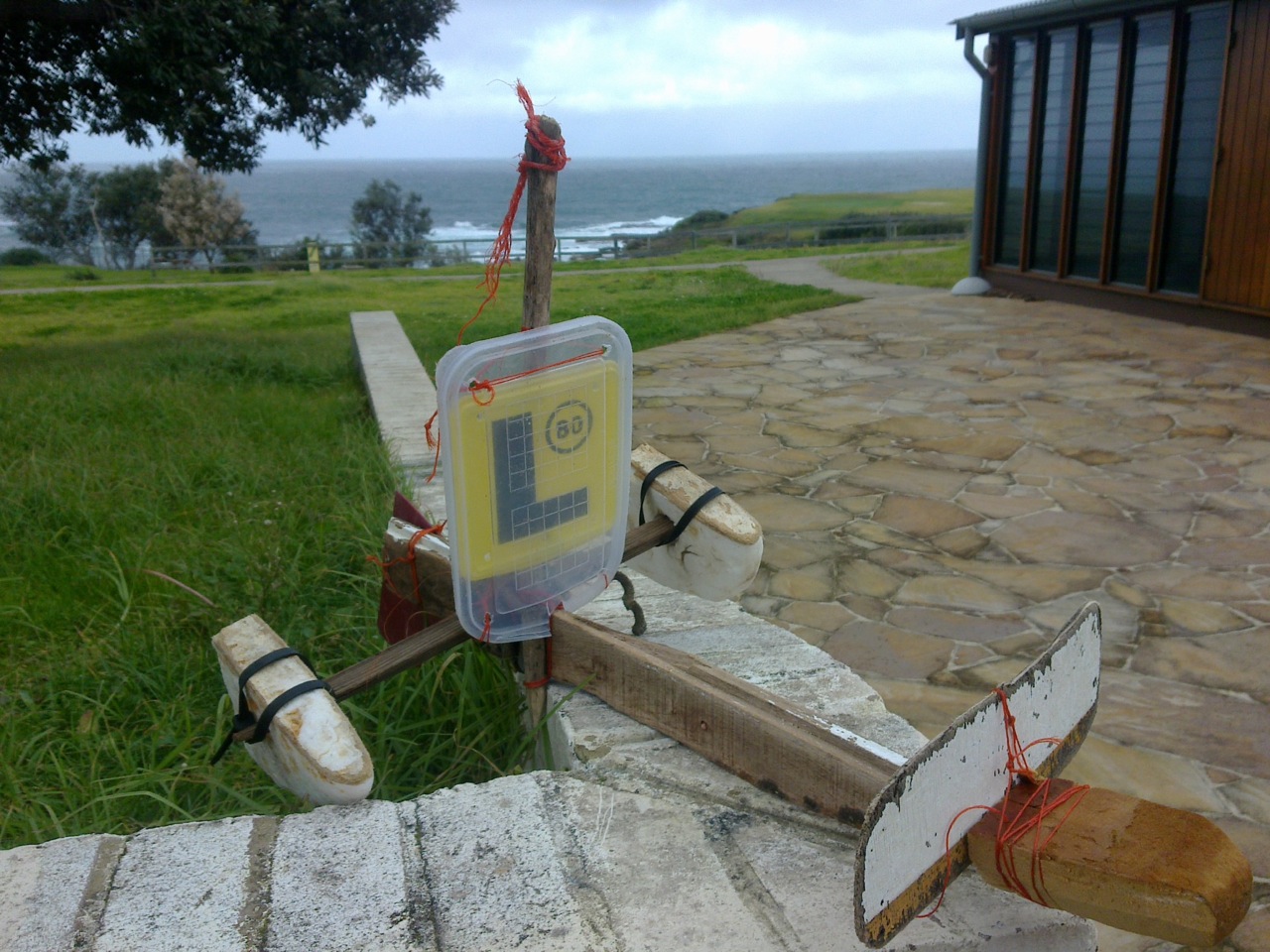
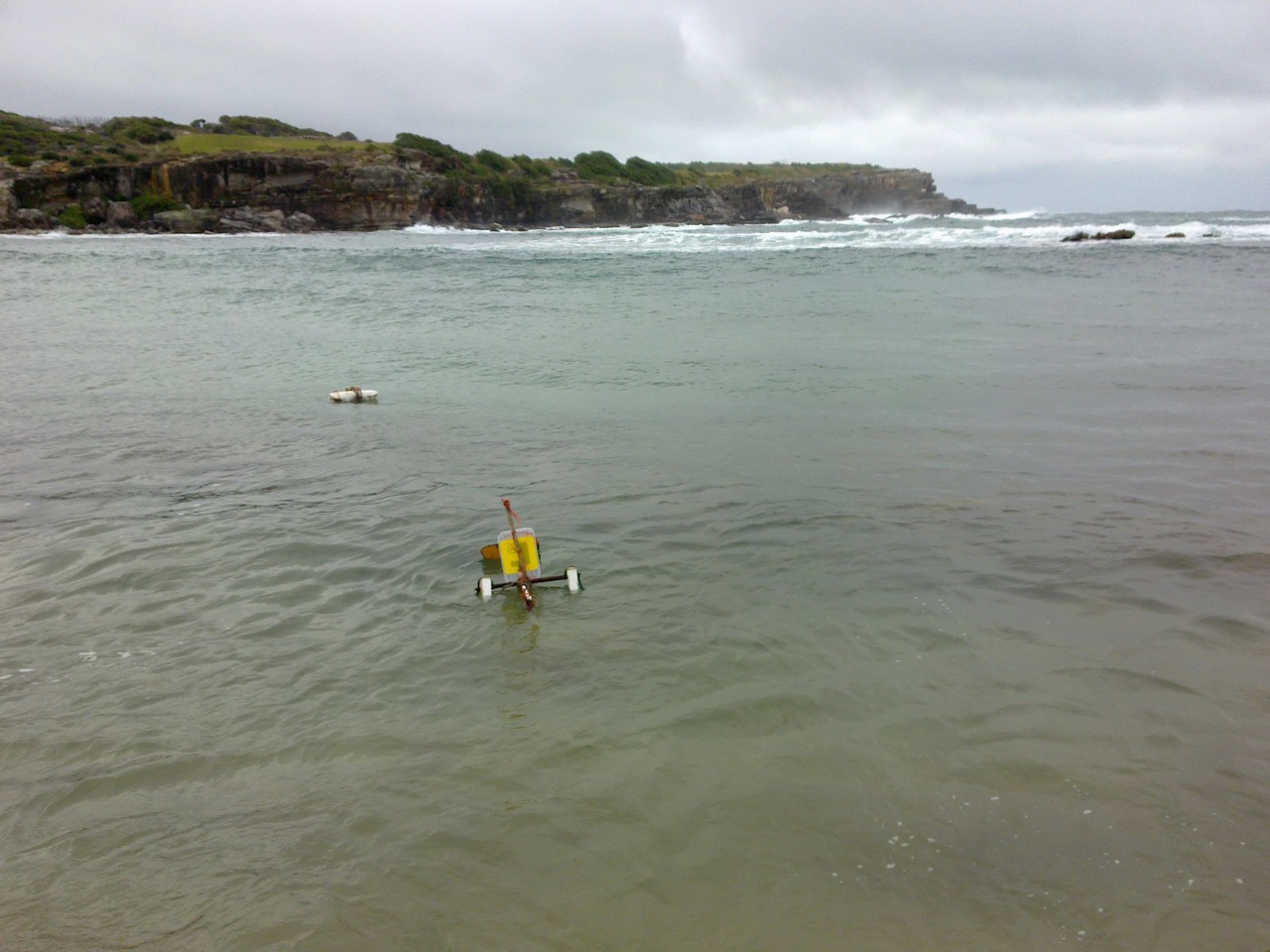
Less and learned was put together at Yarra Bay then taken over to Little Bay to be launched on the south wester. Carved foam outriggers fixed with zip cords found on the beach. A foam nose cone and plywood bow sail kept her pulling in a straight line considering the long wooden hull and main sail positioned quite far back. The other boat in pic 4 is the ‘All Prezz Express’. Less and learned took off well in the strong breeze and cleared the shore break easily. She was looking good and pulling out to sea but ultimately couldn’t clear the extensive heads to the north of Little Bay and was dragged across and smashed onto the rocks in spectacular fashion by the large swell out on the point. You can just make out about half way across the bay in picture 5 taken with the zoom on my phone.
- Leave a comment
- Posted under Boat
June 20, 2011 Item 3: Dove Tail

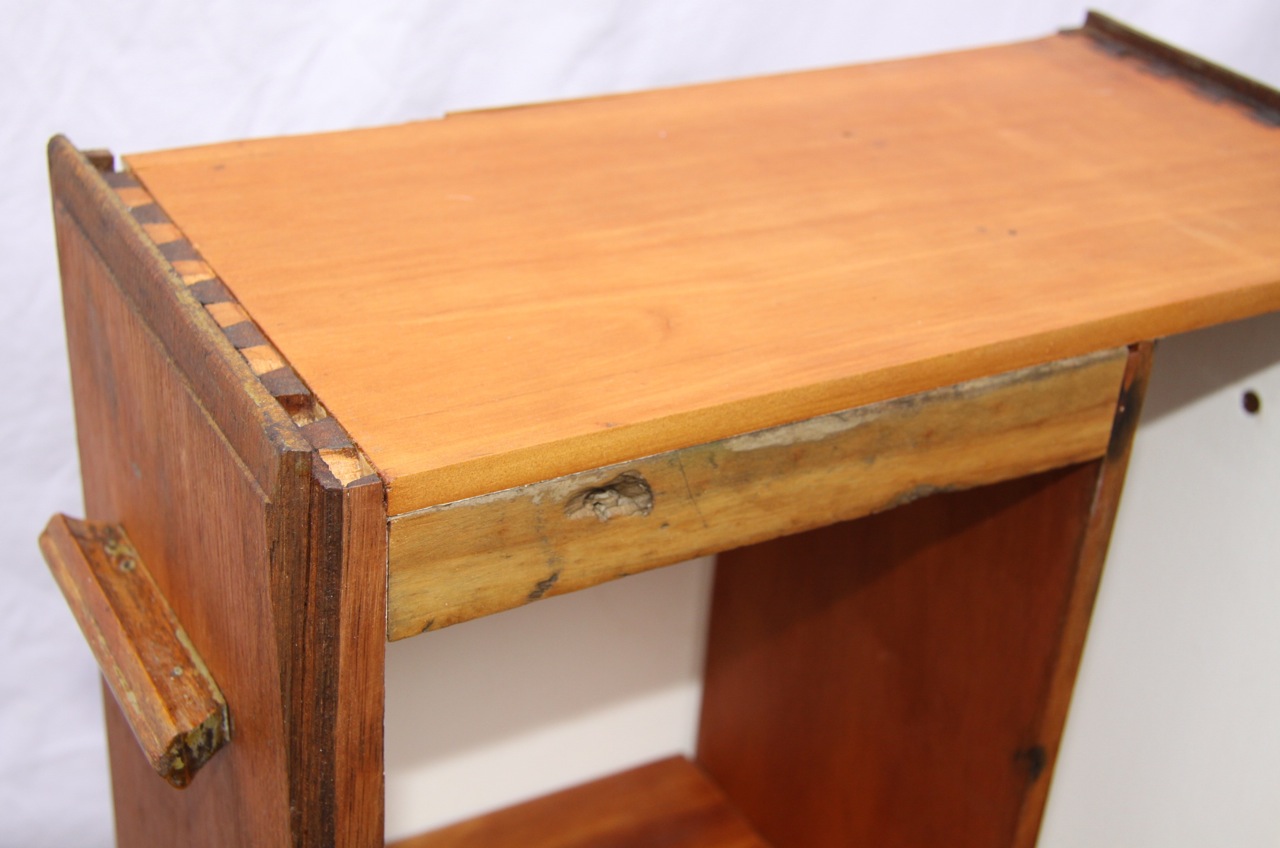

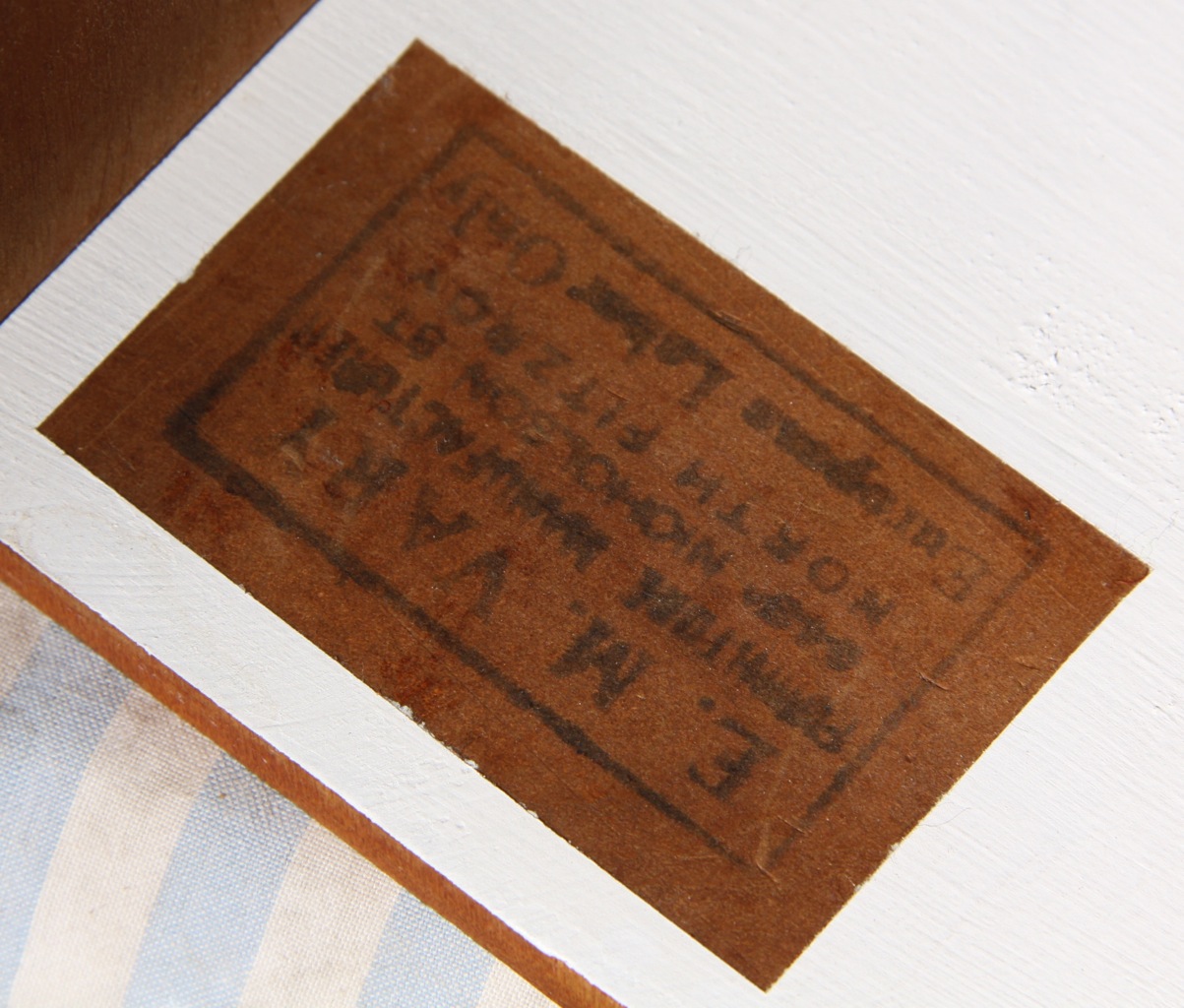
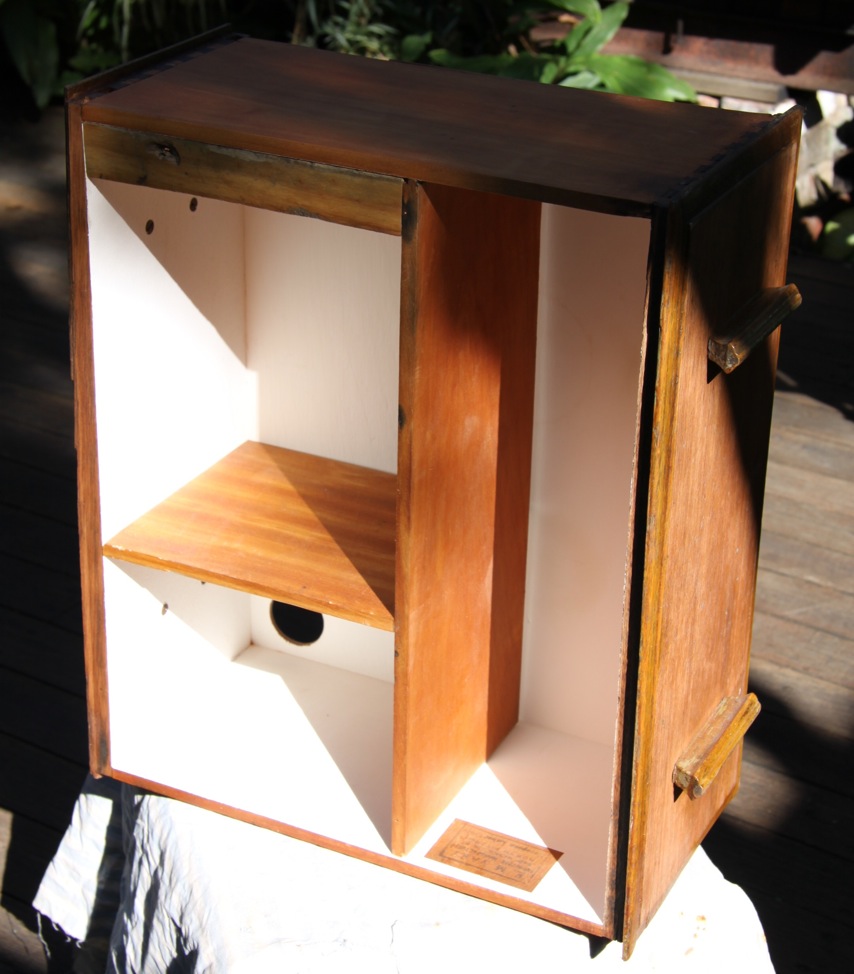

Composed of timber draws rescued from the street. A draw face to the left and right side with original handles c1930s? Internal painted white and some driftwood incorporated into the structure. Stamped; ‘E. M. Vary Furniture Manufacturer 343 Nicholson St North Fitzroy. ‘European Labour Only’. 😦 Not sure if this is a remnant of the ‘White Australia Policy’ period? The holes in the back board where drilled to accommodate the electrical cord of the clock radio and other appliances.
- Leave a comment
- Posted under Item
June 16, 2011 Boat 5: The Roster
1. The Roster.
2. Bow float.

3. Stone keel/rudder.

4. Ambitious sail area.

5. Setting out.
6. Bon voyage (short lived).
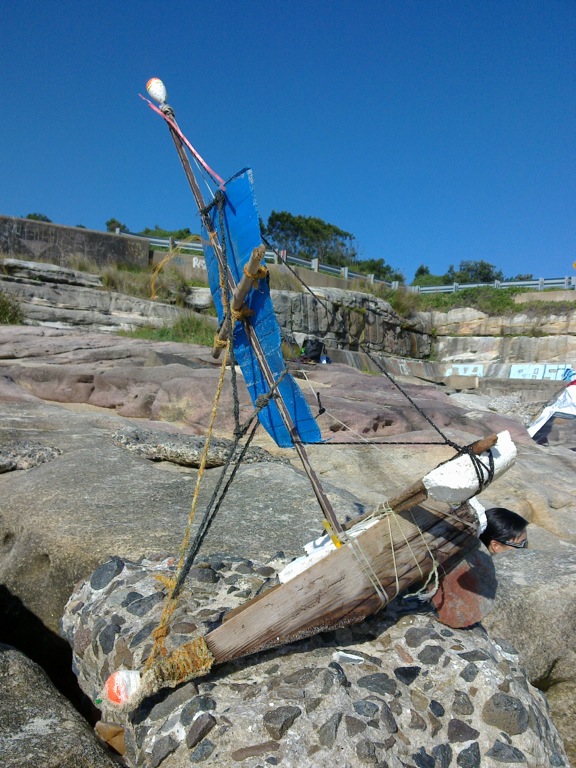
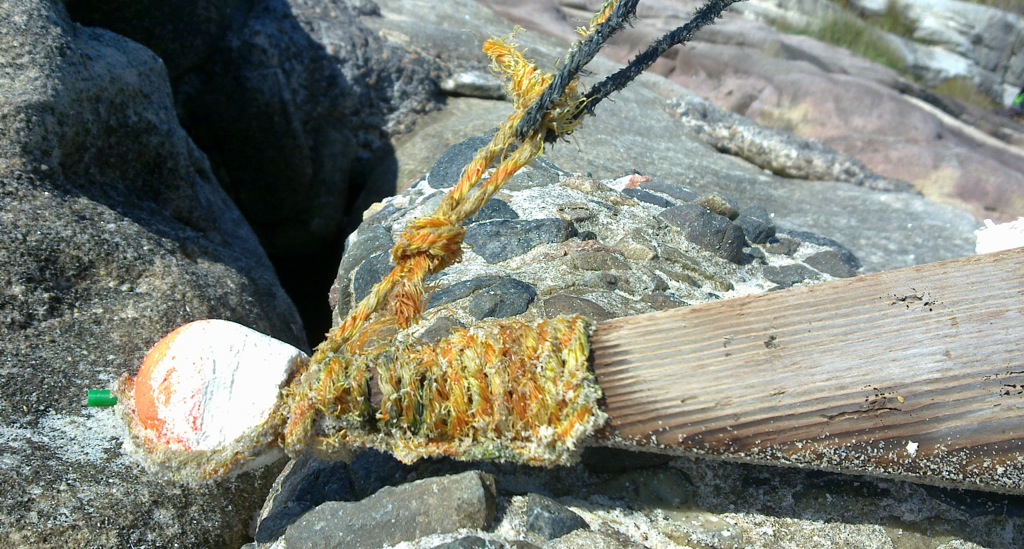
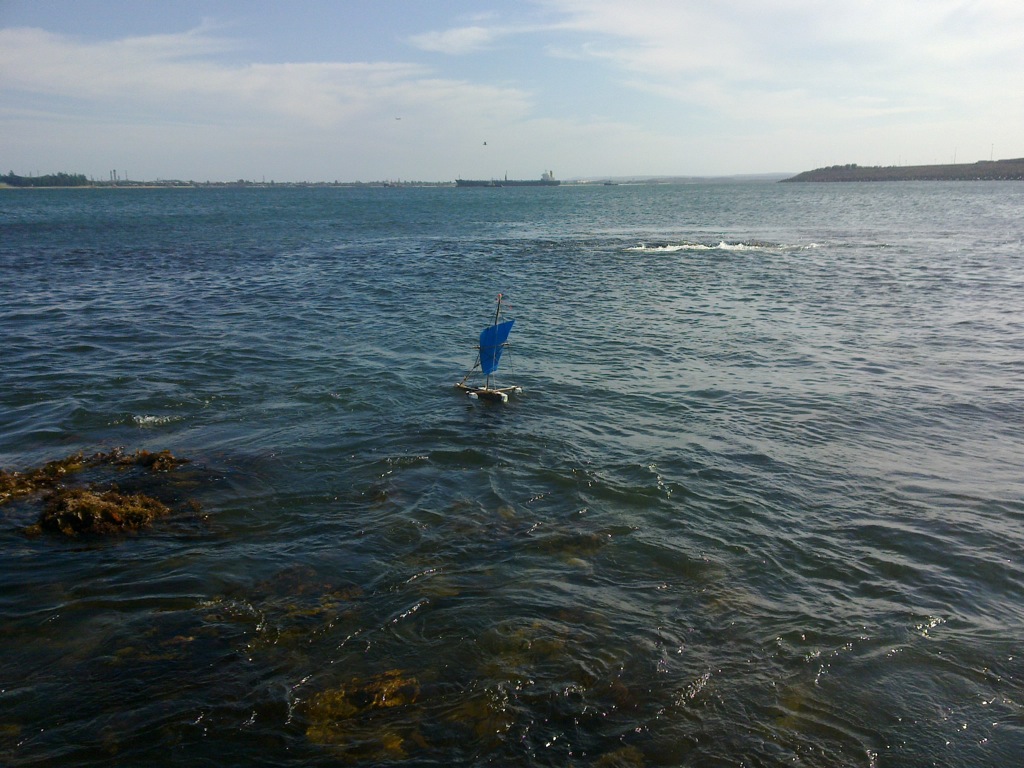
The Roster employed some inventive tying off, a fancy foam and wooden combo hull and a stone rudder/ keel, a roped on foam nose cone and a tall blue sign board sail. She looked like a pretty tidy ship, however was to tall on the water and didn’t make it to far out before toppling over. These skimmer style boats are not particularly good at self righting anyway if they go over and this one had no chance with a tall sail, under sized outriggers, a dinky nose float (for the amount of thrust from this big tall sail) and small keel ballast! Still a few new tricks were learned and some rubbish taken away from the beach. Though some people on the beach did mutter some disapproving comments of me and the boat when it tipped over. You cant please all the Aqua Bogan onlookers all the time I guess.
- Leave a comment
- Posted under Boat
 salt and wood